Tuesday, November 29, 2011

Lessons of via Faentina, part 1

The street where I live becomes my miscreant muse:
the first installment in a series about quality-of-life issues
in the cradle of the Renaissance.

Dear Readers,

Indulge me while I imagine its idyllic past—when, perhaps, ox-carts bearing great sloshing demijohns traveled its lazy contours, meandering bucolically from Florence to Faenza, returning in the soft dusk laden with the glazed earthenware pottery for which that city is renown. Alas, the via Faentina today bears no resemblance to this figment of yours, truly. It is, instead--at least within Florence city limits--a grim corridor of relentless traffic which bolts cars, buses and trucks toward Florence's center in the morning, and projectile vomits them back out during the evening rush hour.

For us here in Fiesole's haughty shadow, the via Faentina is our jugular vein--the only thoroughfare leading south to Piazza delle Cure and downtown, and it is along this narrow, busy artery that we residents must mince along cautiously, watching our step lest we fall prey to the insatiable beast of traffic. I have lived on via Faentina for the past ten years, and almost without realizing it, have become a reluctant, recalcitrant student of the lessons it insists on teaching me.

Lesson number one: cars rule the road like despots


Typical morning rush hour


Traffic cops arriving too late to be much help--
occasionally they show up to assist school children in crossing the street

Rush hour in via Faentina is nightmarish: a great snake of bumper-to-bumper vehicles slithers its way to or from the city center, their occupants often oblivious to things such as crosswalks or red lights. A car or bus can take 15 to 20 minutes to reach Piazza delle Cure from the neighborhood--a trip that would take a mere 10-15 minutes on foot. The air is so thick with exhaust it feels like wading through some kind of toxic pappa col pomodoro. As a committed pedestrian and cyclist who fights this malevolent serpent on almost a daily basis, I can't help but view my relationship with the city as adversarial.

Whatever else our cherub-cheeked, milk-fed Mayor Renzi would have you believe, Florence is not very pedestrian-friendly, unless you confine your perambulations to the city's historic center, and even then you must dodge marauding taxis or risk becoming a human frittata. Public transportation is notoriously unreliable--if I had a euro for every time I waited for a bus that never came, I could solve Italy's debt crisis single-handedly. With the lack of viable options and the ferocious traffic, getting around town remains about as enjoyable as getting one's gallstones removed--though unfortunately not as quick.

Lesson number two: pedestrians count for little

My kids and I walk the via Faentina every day to get to and from their elementary school. In one stretch the sidewalk measures 33 inches (84 cm) wide--which leaves only a few inches between us and monstrous semi-trucks or city buses. (I've been swiped by side-view mirrors too many times to count). Every day I pray to my various gods that we make it safely, that we don't stumble on the uneven, broken pavement and fall under the wheels of a passing car.

33 inches of sidewalk + heavy, fast-moving traffic = death trap


While other parts of the city have seen speed tables installed (flatter and gentler than rounded speed bumps), for most of via Faentina--notwithstanding the narrow sidewalks and the densely residential character of the area--vehicles are allowed to race along with impunity, as if it were a Formula One speedway. Often cars are parked up on the sidewalks or block the crosswalks entirely. Perhaps most disturbing, however, is how the lines between sidewalk and street are consistently--and dangerously--blurred.


A truck graciously descends from the near-nonexistent sidewalk
so that we may continue on our way

For pedestrians the options are: backtrack, hug the wall, say a fervent Hail Mary,
or resolve to meet your Maker

Walking sucks

Lesson number three: there are two Florences

One of the things I've come to terms with over the past decade is that the Florence of art and beauty and charm--the one that makes all the tourists go gaga (and is largely confined to the historic center)--has an evil, ugly twin: the Florence that is choked by traffic, bureaucracy and a rampantly provincial mentality; the Florence that was this year named the most polluted city in Italy; the Florence that makes walking your children to school as pleasurable as having oral surgery without anesthetic, and as foolhardy as playing a game of "catch me if you can!" with the Grim Reaper.

Yours,

Campobello

Sunday, November 27, 2011

When the frosting hits the fan: an article for The Florentine


Who knew that serving cupcakes was an act of cultural sedition?


Click here to go to article

(I wrote a post on a similar theme, but the results were--ahem--somewhat different)


Tuesday, November 08, 2011

The land of literary Muggles

Dear Readers,

According to ISTAT (the Italian National Institute for Statistics), in 2010 only 46.8% of Italians said they read at least one book during the year. Of these, 44.4% read up to three books a year (because it takes the average Italian in this group four months to read a novel). Only 15.1% of the population read twelve books or more, and 9.6% (that's 2,338,000 families) say they don't even own one book.

Once, when I was at my doctor's office and had settled down for the interminable wait with Theodore Dreiser's An American Tragedy, an old spotted toad in a grubby parka, reeking of cigarettes, sidled up to me and shouted, "My God! It would take me more than a year to finish a big book like that!" I saw no reason to doubt him.

Yesterday, I was at my neighborhood bookstore picking out a birthday gift for one of my son's classmates. I thought of buying L'Evoluzione di Capurnia (The Evolution of Capurnia Tate), but was horrified by this:

Sticker shock

Gulp. €16,80 for a children's paperback???!!! I soon left in disgust (and with an inexplicably much cheaper Roald Dahl book instead).

€16,80--that's $23.10 for a children's paperback. In America, that very same paperback (well, in English, of course) costs $7.99. In England, £7.99. On Amazon Italy they're offering a slight discount: €14,28 ($19.63). Perhaps I didn't examine the book closely enough and the pages were made out of camel skin or ancient Egyptian papyrus or something. But a quick look round the shop had me steeped in similar dismay: Harry Potter paperbacks were €16 a pop, Tolkien's Lo Hobbit cost €15 in paperback. Small paperback early readers were €6-9 each.

Here are some other disturbing statistics: only about 10% of Italians go on to higher education (the absolute lowest of the countries surveyed); reading literacy among 15 year-olds is ranked 20th out of 27; mathematical literacy ranks 23rd out of 27. Student attitudes in the form of dislike for school, however, have Italy ranking at the top--coming in at 2nd out of 17; those that find school boring come in 9th out of the 17 countries surveyed; and as for classroom disorder, Italy is Numero Uno.

Oh, and even Greece pays its teachers more than Italy does.

To this I'd add that the ever-deepening economic sinkhole Italy finds itself in has affected public schools--which were always pretty strapped and bare-bones, let's face it--in a way that is profoundly disturbing. There is no money for supplies--that is, things like paints and paper. There is no money for soap and toilet paper for the bathrooms. There is no money for class outings, for art and music instruction or for hiring English teachers (this last is no great loss--most of them stink anyway). Schools have had to ask the parents (many of whom have already tightened their belts to the point of asphyxiation) to supply these things or the money with which to buy them. My daughter's teachers buy toilet paper for the little second-graders out of their own pockets and on their puny salaries.

And publishers dare to charge €16,80 for a children's paperback.

Suddenly all the above statistics and experiences, taken as a whole, begin to make sense to me. Here in Italy, a premium is placed on Berlusconi-esque (let's call it "Berlesque") television, a bloated bureaucracy, and the excesses of a political elite abhorrently out of touch with the reality of most citizens--while reading and education are relegated to a status just below garbage collection. I begin to understand the depth of the ignorance of the masses that kept re-electing such a pancake-faced buffoon--they're the same ones who stare vacantly at his inane and tasteless variety shows rather than stick their noses in a good book.

An Italian tragedy is more like it.


Yours,

Campobello

*Statistics provided herein were sourced at ISTAT, and via UNESCO and OECD at www.nationmaster.com

Sunday, October 30, 2011

From the pet peeve department

Dear Readers,

For eons, tourists have come to Italy and have giddily snapped photos: of Florence's Duomo and Rome's Pantheon, of the Amalfi Coast and the Umbrian countryside, of fountains and piazzas, of Fiat 500's and Vespas, of monuments and mouth-watering Carabinieri--and I get it. I get it.

But what I've never understood is why laundry hanging out to dry should warrant a place in the family photo album, or worse, in travel articles advocating the glories of a particular Italian location (I'm thinking specifically of a recent New York Times article on Naples, with its clichéd and apparently obligatory photo of Neapolitan-style biancheria*). I mean, it's laundry for Chrissake. Granted, Italian laundry--but those aren't exactly Missoni dishtowels or Valentino skivvies hanging up there. Hardly. Why is the sight of some old lady's pantyhose or a few faded bedsheets considered charming and so very Italian, merely because there are cobblestones below and a fiendish bureaucrat (doubtless) nearby? I have a theory--unproven--that familiar objects take on uncharacteristic appeal when they are superimposed on a foreign locale.

How adorable! Laundry all'italiano!
The fact is, Italians don't have clothes dryers--if they did, you probably wouldn't see so much laundry hanging around. So taking pictures of Italian laundry is like taking pictures of, say, my mother-in-law's dentures (if she had teeth, you wouldn't be taking pictures of her dentures)--it's just dumb.

As an experiment, I recently pretended I was an Italian tourist in Portland, Oregon and snapped a photo of the clothes-drying rack in my friends' apartment (of course, all Americans have dryers--though some may elect to let certain items air dry--which makes capturing an image of native laundry all the more difficult):

That rare and most elusive of commodities: American laundry

Now you tell me, dear Readers--what's the big effin' deal about laundry?!


My best regards,

Campobello

* I don't know about you, but the sight of indigenous underwear doesn't make me want to immediately jump on a plane in order to revel in Italian cultura.

Monday, October 24, 2011

The quirky shall inherit the earth

Dear Readers,

Shortly after returning to Florence in September, my neck seized up painfully, I began to shed hair like a Siberian Husky in spring, I fell victim to fever, flu, and a pernicious sinus infection, and the nervous eye-twitch that had left me after I quit my loathsome job last April began feathering about my brow again. While two months in the States did me a world of good, it had some unforeseen consequences. I felt happy and deeply relaxed in a way that I didn't realize I'd been missing here in Italy--until I got back and my body launched its rebellion. I feel like I'd been lounging around in soft, sheepskin slippers and then had to cram my feet back into stiletto heels; it's difficult to make that adjustment without some pain and suffering, I suppose.

Thinking along these lines led me to a conclusion: living in Italy is like wearing impossibly high heels--it's lovely at times, even sexy, but completely impractical. And I don't mean it's impossible to live here--just impractical. It takes the mettle of a Joan of Arc to slash your way into the fabric of life in the Bel Paese.

***

What Italy offers--lavishly, deliciously--is culture, of course. Art litters the landscape like weeds. History oozes from every brick. The cult of the table has been well-noted by the gobbling hordes, and though mediocrity is fast becoming the norm in tourist meccas like Florence, in most of the country you can still get a stupendous meal wherever you happen to flop. And meals have a lovely way of unfolding here that feels very civilized, indeed. 

But for me, one of the hallmarks of a civilized society is the dignity allowed humans in the performing of life's most basic functions (i.e. paying bills, peeing, grocery shopping, strolling about town--granted, an eclectic litmus, but nevertheless indicative)--and here, my friends, is where Italy fails miserably. Ever try to find--your bladder bursting from that last macchiato or half-liter of water guzzled in the punishing heat of July--a public restroom in Florence???? Well, look what Portland, Oregon offers its denizens in need:

Spotlessly clean, complete with TP and hand sanitizer--bless you, Portland.

Indeed.


I'll further illustrate my point with the example of a recent trip to the supermarket:

My approach to storming an Italian supermarket may be likened to that of General Patton mounting a military campaign. First, I prepare my list with an eye toward a systematic and ruthless advance through the trenches, with a firm resolve to take no prisoners. When the moment of battle arrives, I hurl myself into the breach--that is, into the Produce section--a roiling mass of grasping humanity, carts akimbo like land mines to be dodged, and fight my way through in furious hand-to-hand combat, rushing to bag and weigh my veggies while sustaining the least amount of bodily injury. Once through the melee, I must then run the gauntlet of the Cheese/Cold Cuts section, where carts line up in a near-solid bank of defense--like an arrogant line of cavalry--their owners immovable dragoons to be thrust aside in brief skirmishes so that I may plunder the mortadella and mozzarella.

I soldier on--through Dairy, Meat, Baking Supplies, Pasta, Coffee, Cookies, Wine, Bread--piloting my cart like a kamikaze, fending off attackers in the form of old ladies smelling of moth balls, powdered rose and decay, taking hits (bayonet-like jabs to the ribs, cart wheels ramming ankles, stomped-upon tootsies--with nary a "pardon me," of course--after all, this is war) but refusing to be brought down, all the while pushing forward--the vision of my empty fridge at home spurring me on towards victory. Only in Frozen Foods do I get a brief respite (Italians aren't big on the stuff), where I can regroup before the final assault on the check-out lanes.

But, unlike Patton in any war he ever waged, awaiting me there is the most evil and fearsome enemy known to fighting men and women the world over--the Italian cashier. With cold, calculating precision, I loaded my groceries onto the belt, heavy things first, knowing I'll have to bag them up at the end. I tried to conserve the little energy I had left, quenching myself--for the moment--on pure adrenalin. My shopping totes were cocked and ready, and once my time came, I leapt to the end of the belt with a cry of "Geronimo!" and started bagging as fast as I could. The enemy was hurtling fragile foodstuffs at me with the vicious accuracy of a sniper raining bullets or lobbing hand grenades--wine bottles, eggs, cartons of yogurt. The sound of clanking bottles and squelching plastic was sickening. Then the she-devil reached the point where no more stuff could be fired down the belt at me unless I cleared some space--even though I was fighting with frantic desperation--and said, with withering scorn, "Madam, you need to get these bottles and things out of the way!" Patton, of course, would have shot her--but I, facing sure defeat, just pressed my lips together, wished I could morph into a spitting cobra, and labored on. She continued to regard me with boredom and contempt, alternately examining her cuticles with interest and chomping her gum, while I heaved the last of my groceries into my cart. Thus reduced to a stressed-out, sweaty mess, there was nothing for me to do but surrender--and shell out €160 for the pleasure--and slink off with my tail between my legs. No smile or thank you was forthcoming from this unscrupulous opponent, naturally--unless you counted the slight, satisfied curl of the lip that indicated another human being had been successfully humiliated at her hands, and that she had managed to perform her duties once again without the slightest bit of enthusiasm or warmth.

***

I realize that when one is on vacation, one tends to see things through rose-colored Ray Bans. But it was hard for me not to view Portland as a kind of Pacific Northwest Shangri-La--a land where outrageous courtesy reigns, a realm of quirky locals content to amble about on bicycles, drive (if they absolutely must) as if they have all the time in the world to arrive at their destination, and drop everything in order to meet over an ale or two. It's like Tolkien's Shire--a bit removed from the rest of the world, gloriously green, and with many a rowdy tavern--and the Portlanders are peaceful, friendly Hobbits (the fact that many are to be seen gamboling about the city barefoot, wearing rustic garments, further enhances the allusion). It seemed the exact opposite of Florence.

In Portland, people politely ask if they may sit in the empty seat next to you on the bus. They volley a cheery "thank you!" to the driver when they get off. They stop their cars and let you cross the street whether or not you are in a crosswalk. Everyone I met--from grocery clerks to postal workers to shopkeepers--was astonishingly courteous, engaging in cheerful small talk like morning birds chirping away in trees, and helpful to a fault. (Really, it amazed me. I spent the entire time with my mouth agape and tearfully hugging random strangers for being nice to me). It seemed they did this out of genuine niceness, and as if being cheerful and kind to others made their day go by easier, more pleasantly--it sure did mine. Once, when the bus was delayed at a stop because of something beyond the driver's control, people started grumbling, and the driver then began joking--over the loudspeaker--engaging the passengers who then responded with sallies of their own. We continued this way--everybody laughing and having a good time--for the rest of my journey. On another occasion, I overheard a mother in the park asking all the other people nearby if they'd seen her stray cell phone around anywhere--she'd misplaced it. Another woman offered to call the number for her so she could track it down by its ringtone. Wow. This all may sound like small patate, but I was floored, over and over again, by such good will toward men.

I often get the feeling that, in Italy, the milk of human kindness has curdled.

Living here these past ten years, I have slowly grown accustomed to systematic abuse in the form of sour expressions, doors slammed in my face, pushing and shoving, cutting in line, universal curt treatment at public offices, in shops, and over the phone (there's a general customer service ethic in Italy that Gaddafi would have approved of), and other generally rude behavior. I consider myself lucky if I encounter mere indifference. But would it kill people to smile? To show a little courtesy? To treat me like the multi-celled organism I am? Perhaps it's because of the oppressive weight of all that history and tradition, but I think Italians take themselves far too seriously. They're unable to see how a little levity, pleasantness, or simple courtesy toward strangers adds a ripple to the pond of humanity.

Another clear sign of an advanced civilization--to me, at least--is taking pains to bring a smile to another's face, in order to ease the tensions of daily life. In Portland, this typically takes the form of eccentric behaviors and unusual objects found in surprising places: plastic toy horses tied to old hitching rings all over the city, outlandish getups, juggling unicyclists (wearing outlandish getups), a plump plastic chicken being photographed in all the neighborhood bars and cafés, an inflatable sex doll in the back seat of an old Mazda (with her seat belt prudently buckled), a go-cart race with contestants riding their mock-up hot dog dressed as ketchup and mustard (i.e. wearing red swirly hats and flowing gold lamé capes)--I could go on. Art is so often imprisoned in museums, isn't it--reserved for the elite--but the kind of quirkiness I experienced in Portland may be enjoyed by all, anywhere, anytime; it is truly democratic. And if you ask me, of the two, it is quirkiness that best imitates life. At least, the kind of life I want to live.

Quirkinius squalus portlandis, or Portland Tree Shark

If I'm being unfair or overly cranky in this post, please forgive me, dear Readers. My feet are killing me.

Yours,

Campobello

Friday, July 08, 2011

The Angel of Death wears a wet Speedo

Dear Readers,

It is with immense joy I announce that Summer 2011 for yours truly shall entail total avoidance of Italian beaches. (I've written about my particular aversion to the peculiarly Italian style of fun-in-the-sun here and here). In a way, eschewing the oven-baked, seething stretches of Tuscan sand--bordered by traffic-choked streets, ugly apartment blocks, video arcades and tawdry Luna Parks--has become something of a point of pride for me. I much prefer Italy's mountains--my beloved Dolomites--for a getaway that gives me everything I crave: the wonder of nature, luxurious amounts of sweet fresh air, space to breathe in, pleasantly arduous physical activity, great food and wine, and relief from the heat.

To further tickle the repulsion centers of your brains, I shall relate to you a vignette or two from beach vacations past....

The scene: Elba, June 2001. My brother- and sister-in law--otherwise known as the Bürgermeister and Frau Weiner--and their two young, catatonically-compliant daughters crashed our vacation. My husband and I had been living with his parents in Florence (this was a folly for which I'd gladly render my kneecaps in order to completely erase from memory), I was in the early months of my first pregnancy, and we had come to a shady hillside above Cavoli to relax, escape family and enjoy some much-needed Couple Time. My mother-in-law--curse her black, meddling, pantyhose-constricted soul--saw fit to reveal our secret location in a rented house to the Bürgermeister, who then showed up on our doorstep and summarily dumped his bags.

What was perhaps even more disturbing to me than this total disregard for our privacy was the revelation that the Bürgermeister and brood go to the beach and then spend most of the time there actually shunning the water.

Because water--like ice cubes or air conditioning--will kill you, of course. Therefore it is to be avoided--regardless if it's 105 degrees out, and the hot sand shears off an onion-thin layer of your feet each time you step on it. This is Italy, after all, where the feathery tendrils of tepid breezes on even the most scorching days bring on raging pneumonia, where drinking cold beverages freezes your digestion and proceeds to decimate your internal organs with pernicious stomach acids, and where getting wet--either from bathing, swimming, water-pistol fights, or rain--carries the risk of slow and torturous total bronchial annihilation.

They're a strange breed, these Italians. I mean, to them, shampooing your hair and letting it air-dry, or riding a public bus with the windows open (in summer) is considered a come-hither to the Grim Reaper--while running red lights with impunity, driving the wrong way down one-way streets, or passing on a curve at 100 miles-an-hour is regarded as completely innocuous, if not downright wholesome.

I digress. At the small local beach, Frau Weiner smothered a chaise with her rear end and remained there under the umbrella, as languorous as a corpulent Salome, the entire day--all the while shouting dire warnings at the girls who were forbidden to wade past ankle-deep in the mild surf. Me being American, young(er) and blunt, asked, "Why don't you go in the water?"

"Oh, I don't like the water! I never go in," she replied.

"Then why do you come to the beach?"

She volleyed me a look that said "you impossible fool, one goes to the beach because everybody goes to the beach," and busied herself arranging the elaborate, black, see-through, sequined cover-up over her plump thighs.

Meanwhile, the Bürgermeister refused to join us under the umbrella; he stood--stood, mind you--on his hind legs for hours under a tree back near the road, in a white tee-shirt and swim trunks, watching the girls at play with fixed and vigilant eyes, like some prissy, neurotic lifeguard. This was when I tried in vain to come up with the Italian translation of "Jeez, but that guy's got a big stick up his ass" for my husband.

Frau Weiner's aversion to water is inbred, I found out. Her parents have a beach house in Viareggio, mere steps from the boardwalk, and religiously rent a front-row spot in one of the more expensive bagni every summer--but they, too, never deign to enter the water. In fact, even though they pay through the nose for the privilege of having their chaises and umbrella available for the three-month duration, they've stopped going to the beach at all, abandoning their precious patch of sand to visiting grandchildren. "It's too hot," they complain.

That's why there's the water.

One summer, we accepted an invitation by the Bürgermeister clan to join them in Viareggio, and watched the Fear-of-Water-Hurly-Burly-Show play out daily. As usual, Frau Weiner was ensconced on her chaise like Jabba the Hutt on a plinth, each day sporting a different fashionable swimsuit with gauzy, coordinating cover-up and sparkly infraditi. This time the Bürgermeister managed to actually sit for periods--albeit bolt upright--in a canvas director's chair, craning his neck to watch every life-threatening splash the girls made. An oversized canvas beach bag sat next to Frau Weiner, and every time the girls would tire of their games and come out of the water--to play in the sand perhaps, or get a drink of water or a snack--she would pluck two fresh bathing-suits out of the bag and immediately change them, towelling them off frantically, lest they catch a chill. Every time. I was as riveted by this ritual as if she were Houdini performing the handkerchief trick out of a top hat--bathing suit after bathing suit kept coming out of the bag, in seemingly endless supply. Once again I couldn't resist:

"Why do you change them every time they come out of the water [you psychotic, Lycra-encased sausage]?"

"Because they'll get bronchite if they sit around in wet suits [you hopelessly stupid, foolhardy Yank]."

"Oh." I squinted up at the molten, orange orb in the sky and at the waves of heat shimmering along the shoreline, while sweat pooled in-between my toes. "Well, we wouldn't want that."

If the poor girls had even so much as one bite of focaccia, or a cracker, or a piece of fruit, the Bürgermeister would command from his director's chair, "NO GOING IN THE WATER NOW FOR AT LEAST TWO HOURS, OR YOU'LL GET A CRAMP AND DROWN!" Apparently that was his sole function and purpose for being on the beach at all--since nary a stiff, punctilious toe of his ever even dipped in the water.

***

So if I shan't be spending summer in this Hell--a Hell that could kill me quicker than if I were to be smeared in Spam and left for bear bait--where will I be spending the dog days, you may ask? Why, in Heaven, of course. I shall be enjoying nearly two glorious months in the majestic Pacific Northwest. What's more, I plan on wantonly indulging in all the things that would kill an ordinary Italian: basking in air-conditioned environments until I get goose-flesh, swilling iced tea that is chock full of ice cubes, eating spicy ethnic food, getting soaked at water parks and letting myself air dry--and did I mention eating spicy ethnic food?

Here's wishing a wonderful summer full of similar risks, dangers and pitfalls to all of you, my dear Readers. I may post while abroad, or I may not--we'll see. But rest assured that I'll be back in September--if the Sasquatch doesn't get me, of course. Or the water.


Yours, ever recklessly,

Campobello

Monday, July 04, 2011

Guerrilla-style potato salad (this is NOT a recipe)

In honor of Independence Day, upon which we were liberated from our Oppressors--culinary and otherwise.

Dear Readers,

It's always something. When you live in a foreign country, even the most innocuous request can open up a can of wriggling, irritating, cultural worms.

Recently, because of my Yankee origins, I was asked to contribute un piatto americano to my six year-old daughters' year-end class picnic. I smothered a loud, curmudgeonly groan and the usual array of curses with an effusive, "Why, of course! I'd be delighted!" The organizer-mom had the cute idea to ask everyone to bring a dish from their native land--which is odd, considering that nearly all the parents are Florentine and thus we'd be having the usual slew of local fare. But, upon reflection, I suppose this class is about as diverse as it gets for my little corner of Florence: there are two American moms (including yours truly), as well as a Japanese, a German, a Danish, and a French mom--and one from Calabria (though from a bona fide region of Italy, she's considered as foreign as the rest of us).

Preparing ethnic/American dishes for Italians is a tricky business (one I have touched upon here), hence my annoyed reluctance to subject myself and my not-too-shabby-if-I-do-say-so-myself cooking to the typically close-minded scrutiny of such cuisine-phobic pantywaists. The iconic foodstuffs, the hamburgers and hot dogs and their ilk, seem to be what most Italians expect from us--rather like malaria from pesky mosquitos. I have found that efforts to enlighten them with our genuine, though perhaps harder-to-suss-out, homemade specialties are usually as lost on their sissified palates as flotsam in a roiling sea of culinary provincialism. For instance, every time I have served an honest-to-goodness, made-from-scratch-and-redolent-with-spice pumpkin pie to People of the Boot, they double over and fling themselves from their dining chairs as if they'd just cannibalized a dear-departed, and practically projectile vomit all over the walls. I have, since, ceased to inflict this particular--though dearly beloved to me--dessert of doom on my adopted countrymen.

For the most part, Italians simply have no idea what other people in the world eat—beyond the stereotypes, of course—and, when it comes down to it, they simply don't care.

Once, in the bookstore where I was working, a liver-spotted, toad-like Italian cretin with Baroque sunglasses and carefully-upturned, pressed polo collar asked me to show him a book on American cuisine. When I pulled out Thomas Keller's newly-arrived Ad Hoc at Home, he added--his voice dripping with sarcasm--“That is, if there IS such a thing as American cuisine!" Naturally, I immediately rendered him unconscious by hitting him over the head with the cash register.

I feel no need to be ashamed of American food that uses the best of our local ingredients. Our vast continent is teeming with a Pilgrim's bounty of wonderful indigenous produce; that fresh, green breast of the New World about which Fitzgerald wrote nourishes its wayward children on an embarassment of culinary riches. And of course the tired, poor, huddled masses whose foreign hands stirred the great, exotic, multi-ethnic minestrone created an ever-changing smorgasbord for generations to enjoy and riff upon. American cuisine is rather like American English—peppered with far-flung influences, constantly innovating and evolving, a veritable bucking bronco of free-spirited creativity—producing a rather astonishing and riotous polyglot range of expression which ennables us to get straight to the point with a grilled-cheese-on-rye, or elaborate more thoroughly with a Creole jambalaya or New England clam chowder. It's a language and a cuisine that both shoots from the hip and frolics with the sublime--and, yes, it does have its fair share of barbarisms.

Entirely at a loss, I put the question of what to make for the class picnic to friends. Among the quintessentially American (and, I suspect, slightly irreverent) suggestions were: pizza-lasagne-spaghetti, White Castle sliders, Tater Tot casserole, funnel cakes, coney dogs, Twinkies dipped in taco sauce (this from a respected educator. Hi Mr. S!), cocktail weenies, lime Jell-O salad, mac n' cheese, and my personal favorite—buffalo jerky, roast squirrel (or, in a pinch, muskrat) and acorn mush. Now that's what I call going native.

In the end I decided on an archetypical picnic food: the humble potato salad. After all, I reasoned, Italians eat potatoes, don't they? I knew I'd be playing fast and loose, though, what with the spicy mustard I add to the mayonnaise. And of course there was the clear and present danger of the bits of pickle and celery—that could trigger the inborn revulsion/expulsion reflex. But dammit-all, I'm proud to be American and by God I was gonna give those self-righteous noodle-eaters a taste of the Stars and Stripes! Hell, yeah!

So I stormed the picnic with a splendidly defiant potato salad, my eyes blazing, my head held high.

I discovered that only myself--representing the red, white, and blue--Japan, Denmark, and Calabria showed up. (Clearly the others were chicken). "Well, here goes--to hell with them!" I thought, as I slapped my Tupperware down decisively on the long table under the gazebo, daring the first Italian to taste my offering. (I suppose this attitude makes me the anti-Christ to Martha Stewart's Jesus).

Did they eat it? No. Sure, there were a few cautious nibbles, then the culinary equivalent of a dead silence. Me and Danish mom (who brought a bowl of crispy bacon, God bless her, of which I and my wolfish offspring ate two-thirds and dumped what remained into my purse) polished off half. Then--to add insult to injury, as they say--I was asked to judge an Italian mom's attempt at New York-style cheesecake. Still burning from my slighted potato salad, I looked down at the impossibly flat, sticky-purple-goo-slathered, burned-periphery concoction and tried not to let a Kurtz-like tremor of horror overtake my body. The thing had three inches of Kalahari-dry, brick-like cookie crust and two centimeters of a glum glop comprised of cream cheese, mascarpone, ricotta and--apparently--cotton balls. But did I gag and clutch my throat? Did I spew in disgust and wrath? No. I choked the abomination down, smiled, and pronounced it delicious.

And as it turns out, I was also too chicken to cackle or mock or show my stunned surprise at the enormous plastic trough of STEWED VEAL that some Italian miscreant brought. (Nothing like thick, hot stew at a picnic in 90-degree weather, I always say! How dare they spurn my cool, tangy, tastebud-tickling potato salad? Fools! Xenophobes! Depraved stew-lickers!).

Thankfully, James Beard, MFK Fisher, and Julia Child--up there among the celestial crockpots in their culinary Valhalla--showed mercy and did not smite chicken-livered me with an outraged lightning bolt from on high.

So as you see, dear Readers, I clearly failed in my mission. I do not possess the forbearance and valor needed to force the food of my star-spangled heritage down the gullets of infidels. It takes real guts to be a soldier in the culinary crusades here in Italy, I tell you. More guts that I have, that's for sure.


Yours,

Campobello

Thursday, May 26, 2011

The Rapture, Florentine-style

Dear Readers,

Okay, the world didn't end recently as predicted--but some of us aren't off the hook yet. Personally speaking, the end-times are breathing down my neck like an Italian mother-in-law after the birth of her first grandchild, because very soon my two chimp-limbed urchins shall be catapulted from the industrious froth of scholarly life into the placid, lotus pond torpor of le vacanze estive.

Picture, if you will:

The setting: a wide, dusty, unpaved street--the main thoroughfare in a former Wild West boom town, now all but abandoned by decent, god-fearing folk. Tumbleweeds drift aimlessly, the sun a hard-boiled egg yolk consuming the sky, heat shimmers thickly on the far horizon, and there's not a soul abroad in this hell's high noon.

(Foreground) A woman--quite pretty, actually--with a determined set to her jaw and a missionary's gleam in her eye, comes into view. She stands in the middle of the street, wide-legged, hands on hips, sweat glistening on her brow--ignoring the sun's glare and fixing her gaze on two figures who suddenly appear menacingly in the near distance. She's wearing a badge that reads "World's #1 Mom" and has dropped two colorful backpacks at her feet, each chock-full of books and educational activities. She takes a hearty swig of pinot grigio from her hip flask, wipes her brow with the back of her hand, pushes her specs back up onto the bridge of her nose, and steps forward as if to meet her Maker.

(Cut to background) Two reedy rapscallions--a sawed-off six year-old girl with an imp's mug, and a shaggy-maned nine year-old boy with grubby fingernails--stand easy and bold-faced at the far end of the yawning, deserted street (the townspeople--smelling imminent bloodshed--having shuttered themselves away), and lock their cold, calculating eyes with the woman, never flinching. They're cocky. Cool as cucumbers. Looking for a fight. Their stance is equally splay-legged and defiant, and they're brandishing video-game remotes with the confident dexterity of born gunslingers. When they see the fool woman advance up the mean street, they gamely amble forward with the cagey, shuffling gait of rogues who know how to fight dirty.

It's a showdown. Lives and honor are at stake. Or, at least, summer is.

Of course, the end of life as this mommy knows it won't come until after Armageddon--in the form of a brutal onslaught of year-end marathon-length recitals and parties--the worst torture being the pot-luck buffet dinner at the children's school (if you've never witnessed Italians laying waste to a buffet, consider yourselves lucky--they're like obstreperous jackals). The natives of this sunny peninsula, as we know by now, like to exit stage left with a grand flourish, go out with a bellissimo bang, ceremonialize the trivial, elevate the inconsequential into the monumental--and transubstantiate the inanimate into the celestial. Which means, of course, that instead of just letting us all melt away into 95-degree oblivion for three months, Italian logic dictates that in order to commemorate the mere end of another term we must party like it's 1999.

And then, Judgement Day--ah, yes--when all the good Italian mommies who scour their homes in perpetuity, who iron their kids' underwear, who find time to have their sundry limbs waxed, and who squeeze into skinny jeans and totter about on stiletto heels, will go to Heaven (i.e. the beach for the duration), and all the bad foreign mommies who selfishly enjoy time to themselves so they can read and pursue hobbies--the ones who don't always serve three courses at mealtimes, the ones courting death by wandering the house barefoot, the ones who stockpile Hidden Valley Ranch packets, the ones in wrinkled garments who knock back a cocktail now and again--will be drop-kicked straight into Hell and the door slammed after them. Hell being--in this case--summer in Florence with two kids to keep occupied.

"@!%&@£!!"

(Dear Readers, that's the sound of me girding my loins).


Yours as always,

Campobello

Monday, May 09, 2011

The juggernaut

Dear Readers,

The season is upon us, like a pox--that time of year when the First Holy Communion Circus rolls into town, like a gargantuan, gaudy, Catholic Trojan horse, obliterating everything in its path, disgorging its cherub-cheeked assailants who then proceed to consume entire weekends in an orgy of inconsiderateness and suck up our hard-earned cash like a brothelful of insatiable hookers.

Here in Italy, la prima comunione has morphed into a metaphysical monstrosity, a sacramental side-show--packing more emotional and material punch than even weddings (the reason for this being that Italians become unhinged and lose all sense of appropriateness when it comes to celebrating their precious bambini). Elaborate ecclesiastical stage productions involving scores of kids are commonplace, with ceremonies lasting longer than the Oscars, and after-parties--with plenty of hifalutin loot--worthy of the Hilton sisters. Of course, this rite of passage didn't used to be such a babel-like behemoth. My husband remembers a solemn ceremony, brief enough, and a small rinfresco afterwards of plain cake and spumante with a few toothless, vellum-skinned, seldom-seen distant relatives--in addition to his immediate family--propped up in chairs lining the musty sala parocchiale. As gifts, he got an ordinary rosary, a small prayer book, and the Italian equivalent of a Mickey Mouse watch.

All the madness of the modern-day version of the event struck me--like a righteous fist--recently, as I walked past a party-supply store boasting a lurid, beribboned, Hindenburg-sized balloon (or mongolfiera) in the window, with "PRIMA COMUNIONE" stamped all over it in gold glitter. It had a cavernous gift basket attached to the bottom, the likes of which could carry a host of little holy rollers around the world in eighty days. Or more.

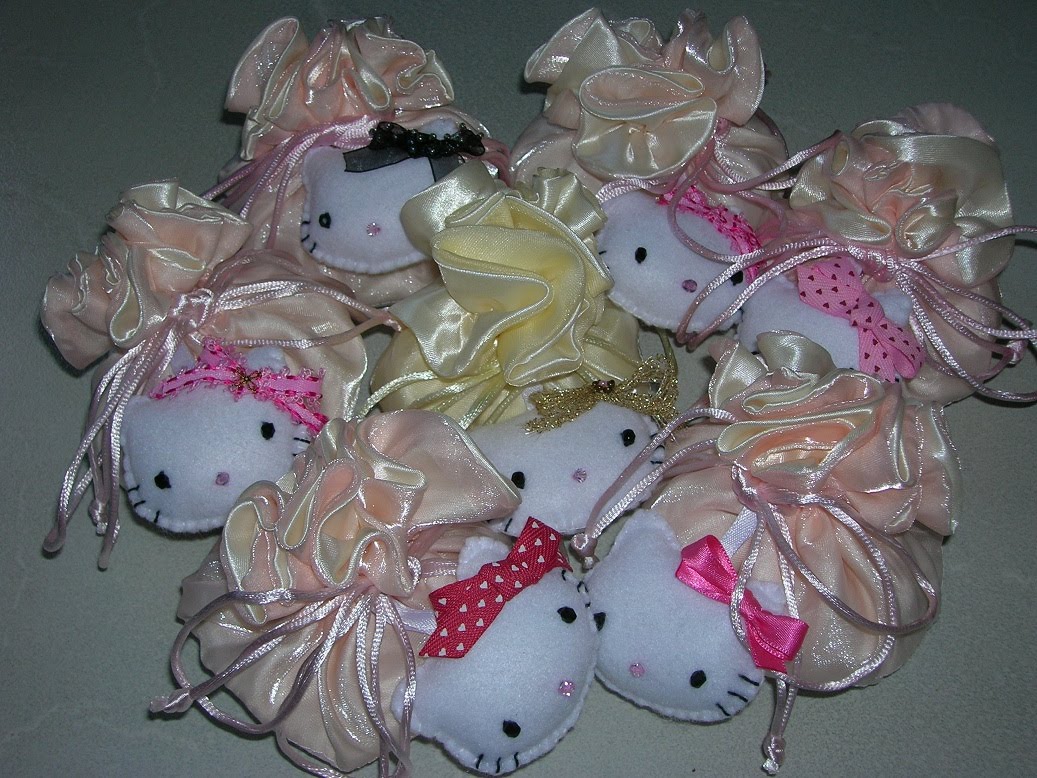
In reality, that basket is meant to hold a good half-ton of bomboniere, the sugar-coated almonds that traditionally are given as party favors to guests, these days in ever more elaborate and fanciful embroidered linen bundles. Inside each bundle is a little slip of paper with the name of the child and the date of her First Communion in calligraphy, lest you dare forget. Eager parents willingly spend a king's ransom on these bomboniere, and--as with much of the rest of Communion-mania--they have become increasingly secular in tone, and are often adorned with cartoon characters, action figures, or soccer balls and the like. Apparently we've reached that point in civilization when the Son of God needs a publicity boost from the likes of Hello Kitty.

But that's merely the start of the outpouring of cash--there's the fancy luncheon or dinner party to be thrown, the double-tiered gâteau or decadent millefoglie to be ordered from a good pasticceria, the expensive new duds for the ceremony, the trip to the salon for girls beforehand for hairstyling, manicures, and makeup. And then there are the gifts. I tell you, these little squirts make out like medieval sultans after a good plundering.

My baptism by fire, so to speak, was eight years ago when my eldest niece's first communion gala popped up on the calendar. I had absolutely no idea what I was in for--if I had, I would have immediately committed seppuku and been subsequently (and blissfully) absent from the whole affair. First, the gift fiasco: my husband and I had thought to give her a small gold cross necklace of the type that would be appropriate for a young girl to wear--something simple and sweet. Instead, we were requested by her parents (my depressingly bourgeois brother- and sister-in-law, otherwise known as the Bürgermeister and Frau Wiener) to chip in "as much as you can" (i.e. hundreds) for a diamond-encrusted, platinum cross pendant  from Bulgari or some such place. I was aghast. This was a bauble worthy of Elizabeth Taylor! (Me being fairly new to this country and to the family at the time, I bit my tongue and the bullet as well, nearly weeping over the loss of two-fifths of our monthly salary. Now, of course, I'd sooner eat a bicycle tire than let myself be coerced into gift-giving. I'd also relish the opportunity to explain to the hopelessly spoiled prospective communicant that you're not supposed to get what you want in this earthly life--that's what being Catholic is all about, goddammit).

In addition to this barbarism, I was forced to endure a hair-tearing three-hour ceremony in a packed-to-the-rafters mega-church, complete with musical numbers and tableaux vivants, and watch some sixty little sheep mince toward the altar where an official event photographer snapped each one posing with the resplendent, golden-robed priest and The Wafer (held aloft)--while Bette Midler's "You are the wind beneath my wings" blasted from the stereo system. My head was splitting, and I had to pee something fierce. Finally the infernal thing came to an end, erupting into a chaos of camera flashes and shouting, and in my delirium I wasn't sure if those kiddies had just been conjoined to the community of Christians or participated in an MTV awards ceremony.

After the elaborate five-course luncheon at a picturesque country restaurant, my imp-eyed niece began opening her gifts and passing them around the huge U-shaped table for us plebeians to see what riches our paychecks were capable of buying. I looked dazedly on while considering the pain-relieving effects of grappa: there was our necklace, smug in its black velvet case, as well as a lovely pair of sapphire earrings, a trendy rhinestone-studded watch, a silver and gold bracelet, and other gewgaws worthy of a maharani. Actually, she was more like the infant Christ turned Elton John and we were the adoring Magi come by way of Madison Avenue. In the years that followed, we enjoyed two more opportunities to dutifully--again at the behest of despotic parents--bestow fine jewelry (and a digital camera) upon my other nieces celebrating their first communion, and suffer through more protracted pageantry.

There may be some Quaker-like mean streak in me, but I can't help feeling that the true meaning of these ceremonies is lost in all the three-ring razzle-dazzle. When did holy get ditched for Hollywood? Don't get me wrong--I'm all for a bit of pomp if the circumstance calls for it, but I think we're drowning the baby in the bath water here.

Because Jesus Christ and Hello Kitty go so well together

Yet I fear we must reconcile ourselves to the onward march of the battalions of First Communion revelers, and resign ourselves to their Broadway-style sacramental blitzkrieg. It certainly seems to be an unstoppable force here in the Bel Paese--comprising as it does that bizarre and powerful mix of Catholicism and unbridled materialism upon which so many Italians seem to thrive. It suddenly occurs to me, though, that perhaps all this sturm und drang really has more to do with satisfying an urge which lies deep in the bowels of the Italian psyche--the boundless appetite for exhibition, the love of spectacle (along with a good party and plenty of good eats)--than anything else. I mean, think about it: why say, merely, "Violetta and Alfredo had a thing for each other," when you can perform La Traviata and bring down the house?

Indeed. Why merely have cake--or the body and blood of Christ, for that matter--when you can eat your cake and flaunt your diamonds, too?


Yours,

Campobello

* The above photo has been blatantly lifted from some Italian mum's blog, wherein she was just tickled pink and oozing self-satisfaction at having scored these babies.

Monday, April 18, 2011

Attack of the five-foot-five heathen woman

Dear Readers,

This post is in essence a prequel to the last one, and helps explain what set me off on that particular rant. Recently, my mother-in-law ambushed my husband over a plate of pasta and told him how she was so very disappointed and sad that our children were not attending Catechism, and that--by obvious extension--were not going to become good Roman Catholics and would probably wind up flame-licked in Hell (a place apparently brimming over with liberal-minded American wives). Well, as you know by now, my dear discerning Readers, nothing gives my hackles rise so much as a meddlesome old lady.

This latest family drama was set off by--get this--my knick-knacks...and is otherwise known as the Great Tchotchke Rebellion of 2011.

Of course, I know the Family has always looked at me askance because 1) I'm foreign and 2) I was raised (in decidedly lukewarm fashion) Armenian Orthodox--and fed hefty doses of mom's Presbyterianism to boot. Once, my father-in-law actually asked me if Armenians believe in Christ. I said, "No, we worship a swarthy, hairy-backed guy named Garabed, former rug-dealer and the God of Stuffed Grapeleaves." My ever-resilient husband has always been regarded as a black sheep because he habitually questioned the status quo: he visited the Hare Krishnas at Villa Vrindavan and read up on Scientology as a teenager, while his mother wailed and rent her garments. (The fact that he also insisted on doing his own laundry was, to her, further proof that he had come under the influence of Satan). So, on this particular day, she also expressed concern over the "heathen images" and "oriental gods" I have around my house (i.e. my serene Buddhas and lovely, carved teak Ganesh, etc.) and that we have no inanimate Jesuses or Marys to bring the Lord's Light into our home. Naturally, if I were to point out to her that, compared to ancient faiths such as Buddhism or Hinduism, Christianity is a mere upstart religon with a renegade recruiter as its point man, she would choke in righteous horror. Her repeated attempts to counteract my iniquitous knick-knacks and insinuate the One True Faith into our home by gifting us things like a watermelon-sized Holy Family musical snow globe have met with failure. Every year at Eastertime she tries to bring a priest into our house to bless it (or perhaps exorcise it)--doubtless believing that if he flings enough holy water on us we'll repent our heathen ways and return to the tractable fold.

But her cardinal beef with us is that we are breaking with tradition. She implored my husband that they are of good, old, upright and long-standing Catholic céppo [stock] and we, in following our own mutinous minds, are an unsightly blemish on the Family's clear complexion.

***

"Bennett looked at him [a Buddhist lama] with the triple-ringed uninterest of the creed that lumps nine-tenths of the world under the title of 'heathen.'"

Shortly after this latest example of my mother-in-laws' mosquito-like intrusiveness, I happened upon the above sentence in Kipling's Kim. Why is it that so many pious jackasses, in the name of religion, are willing--indeed happy--to succumb to the evils of ignorance and bigotry? As many of you know, my in-laws are slavishly Catholic--if the Pope told them to smear themselves with goat droppings and light their hair on fire, they'd do it. To them--and many like them, Catholic and otherwise--their faith is an exclusive club to which only an enlightened few are admitted, leaving the rest of us primordial slugs roiling in an ooze of sin and godlessness. The audacity of the institutions of men in asserting their proprietorship over God continues to astonish me.


A piece of the devil's own bric-a-brac

To tell the truth, I've never been much interested in a God that doesn't allow questioning, doubting, exploring, and seeing the good in all faiths. I am of the firm conviction that firm convictions based on untested experience and unentrained thought--a path never struck with tentative footsteps--are but pontifical pinpoints somewhere on the continuum of fanaticism. And, I must say, I'm not much interested in placating a mother-in-law (or anybody else) who thinks I'm only as good as my creed.

I've always admired people of quiet conviction, whatever their individual faith--those undetected souls among us who strive simply and compassionately to be an example merely by the life they lead, as individual drops of water lie peacefully within a vast pond, feeling no compulsion to evangelize the other drops of water. If only my mother-in-law--that nosy, thick-stockinged, champion of Christ--had a martyrs' mettle to speak her mind to my face, I would ask her, in all earnestness: "I may be an American Armenian Orthodox Protestant semi-Buddhist truth-seeking feminist heathen decorator--but if you prick me, do I not bleed?"

Alas, I have a hunch that any such appeal to reason and intelligence would fall on deaf--and unwaveringly parochial--ears.


Yours, quietly,

Campobello

Thursday, March 10, 2011

Reflections on artichokes

Dear Readers,

One of the things I love about Spring's first tentative footfalls is the advent of the artichoke. The tema, the morelli--lovely, petite, and as tender as young maidens--I'd much rather be presented with a prickly bouquet of these amiable thistles than any vainglorious flower.

A recent lunch with the effervescent and erudite Patricia of Tillie's Tuscan Table began with one of my favorite dishes: a deliciously astringent salad of thinly-sliced raw artichokes, delicate shavings of parmigiano, and scattered tendrils of arugula. Among many things, we talked of what we, as expats, like about living in Italy. Patricia--in her inimitable way--proclaimed, "Italy's the only place that will support my wine habit." There followed an impassioned discussion of the mind-boggling array of cheap, excellent-quality wines that are ours for the taking. Then I looked down at my plate and said, "Artichokes. Like this. That's what I love about Italy."

And, I must say, I love a lunch like that: the artichokes followed by a thick t-bone of wood-charred veal--so juicy I could cry just thinking about it--accompanied by perfect roasted potatoes and a dish of teasingly bitter, velvety spinach. A carafe of honest house red. Simple things, in season--this is the kind of alchemy at which Italy still excels.

To my companion, I added, "I like living in Italy because my kids get to grow up eating like this. That and the fact that they're unlikely to get shot while in their classroom." The cultural hegemony of the Happy Meal and the Glock 9 has yet to encroach upon this sunny peninsula, thank God.

But, I'm torn. Expat life is complicated--at least for me. On the one hand I seem to be ruled by my gluttonous tendencies and my penchant for old buildings, on the other I often experience a longing so intense that it is at times overwhelming. For home soil? All the soothing right angles of America? The deep comfort of English? The allure of other, as yet unexplored, continents? Yes. For sure. But there's something else.

Tim Parks talks of a sort of "structural conflict" inherent in the expats' life. One of its more obvious aspects is living in a foreign language. He says that he arrived in Verona not speaking a word of Italian, and now he lectures in Italian, and lectures on translating from English into Italian (a most difficult kind of translating). "And every moment, every word I speak, I'm on guard against mistakes, I'm listening to correct my accent. It will never be quite right." Even after some thirty-odd years! But I completely understand him--this constant schism in the brain is fatiguing.

Yet he--as do I--loves Italian. "It has become my destiny," he says, "My whole life is tied up with Italy. And I hate it. I hate it for having become my destiny. For taking up so much space."

For taking up so much space. Sometimes I just want to take the world I inhabit for granted. I don't want to have to think about it. I want all that space which Italy occupies in my life to be freed up, to make room for something--anything--else.

But I'd wager I'm kind of spoiled now, even ruined, so to speak. I'm used to the daily challenges, the fish-out-of-water feeling, the fact that I'm always being forced to learn new things and reflect on the culture in which I find myself. I realize that I may very well be addicted to the expat life--if that space were empty, I'd likely grieve the loss. "Would I get better," Parks wonders, "if I went back to the UK and lived a monochrome English life? Or would I just have the same problem the other way round? Yearning for Italy. Most likely the damage, like the benefits, is irreversible now."*

I often think of moving on; I have a restless nature. Who knows what landscapes the future holds, or what my latitude and longitude will be? It's exciting to contemplate. For now, though, the artichokes beckon and I come to the table--hungry and willing to be satisfied.


Yours,

Campobello

*Tim Parks, Teach Us to Sit Still

Saturday, March 05, 2011

Sociable medicine

Dear Readers,

Sundry winter ills have recently propelled me into the labyrinthine Italian healthcare system, or Servizio Sanitario Nazionale, which, I might add [insert oozing sarcasm] is always a pleasure. To me, partaking of this [insert oozing sarcasm again] service is often like being inside Waiting for Godot for all eternity.

But I'm not going to write about all the waiting, the telephoning, the accruing and distributing of certificates and papers, the take-a-number machines, the dingy offices, the vacant-faced medical personnel, etc. What I want to tell you about is the realization--or revelation?--I had that all the elaborate machinations of the system exist in order to give Italy's inordinately large population of old farts--or geriatric mafia--a social life. You see, the more you are forced to hang out in doctors' offices and clinics, the more chances you get to trade grisly anatomical chit-chat with your fellow snowy-domed sufferers.

For example, the doctor's waiting-room I was recently prisoner to was full of black-clad decrepits in shapeless parkas and sturdy shoes, all hacking ostentatiously as if they had tuberculosis, sighing heavily, and bemoaning their fate to those around them:

"Maria Santa, I haven't slept in days!"
"I have The Fever!" (La febbre is always intoned ominously as if one were invoking Satan)
"I can't have a bowel movement!"
"My liver hurts!"
"I've had the runs for a week!"
"My hemorrhoids are acting up!"
"O Dio, I'm unable to swallow!"

These proclamations always elicit sympathetic responses, followed by a curious one-upmanship:

"Well, I haven't had regular bowel movements for thirty years!"
"Well, my pee is purple!"
"Well, the ringing in my ears sounds like the intro to Porta a porta!"

This is a by-product of living in a Catholic country, of course. Suffering is expected, enjoyed even. Since you claim your Celestial Sweepstakes prize in the next, eternal life, you may as well wallow in your own misery in this more temporal existence. And be sure to tell everybody about it (no Anglo-American reticence here, thank you very much!)--indeed, why not compete with your neighbors to see who suffers most? I get the feeling these old folks believe that the size of their eternal reward shall be directly proportionate to the amount of physical suffering they have endured here on earth. Thus, according to geriatric logic, varicose veins equals a meagerly-appointed, single room in Heaven's hostel, while inflamed boils combined with gout and perhaps the insertion of a pacemaker garners a deluxe suite in God's five-star spa & resort, complete with cherubic-cheeked cabana boys serving drinks with paper umbrellas in them, poolside.

There's no shame whatsoever in the body's afflictions, in fact it's all part of polite conversation. When I see a neighbor on the street and volley a perfunctory "hello, how are you?" in passing, I am often stopped and served up a hair-raising tale of invasive surgical procedures, squamous skin conditions with frightening Latin names, harrowing infections of biblical perniciousness, and other torments of the damned. Once, when I went to a neighbor's apartment to return something I'd borrowed, I was met at the door by her harried elderly mother (she lives with her parents, of course) who said, "Oh! Please, wait only a moment--I was just giving my husband an enema. I'll be right back." I then spent an agonizing ten minutes on the threshold, trying not to imagine the goings-on down the corridor, desiring with every fiber of my being to creep back down the stairs, but forced by some perverse sense of etiquette to listen to an enema being administered to--from the sound of things--a most recalcitrant old man. Presently the barrel-shaped Signora returned, huffing and snapping her rubber gloves off crisply, and said, "Now, what is it you wanted?" I tossed her the parcel and fled.

If you listen closely, dear Readers, you will hear it. Like the constant drone of motorini, the never-ending raga of the ailments of the nation's elderly can be heard in every doctor's office, clinic, alimentari, beauty salon, bank, city street or piazza. Blood-pressure and white blood-cell counts, toe fungus, swollen ankles, inert thyroids, osteoporosis--the moribund music is pervasive. What's fit only for the ears of trained medical personnel in other parts of the world is, I repeat, fodder for everyday conversation in the Bel Paese.

I suppose one could view all this senile social interaction as part of the charm of Italy, indicative of a slower pace of life that allows lonely, chatty septuagenarians and their ilk the chance to feel connected to those around them, evidence of a fast-fading way of life that is bound to go the route of the brontosaurus. I suppose one could smile beneficently when a harpy-voiced old crone chirps out the state of her much-belabored intestinal tract in a dull, five-by-six-foot unheated room packed with germ-ridden supplicants. It's enchanting really.

To give yet another example--while standing in line at the pharmacy last week to fill a prescription, I had to wait fifteen minutes while the potato-faced geezer in front of me regaled the pharmacist with the excruciating details of his cataract surgery. And she didn't care one whit that I was waiting (perhaps even in dire need of life-saving medicines), but seemed to be really enthusiastically listening. I shuffled my feet, shifted my weight from one leg to the other, looked at my watch--to no avail. Cataract Man would have his say.
The chosen people

But who am I to criticize, to cast aspersions (and acerbic aspersions, at that)? I know that someday I, too, will be old. And then I, too, may gain great pleasure in recounting at length to the pharmacist (or anyone who will listen) the story of my recent hip-replacement surgery or my losing battle with incontinence--while a host of impatient souls in line behind me riddle my back with imaginary daggers as they wait fruitlessly to fill their prescriptions.

I do believe I shall relish it.


Yours,

Campobello

Tuesday, February 15, 2011

Hey, you! Mr. Marzipan-man!

Dear Grown-ups,

My mommy is letting me guest write on her blog--well, I mean, I talk and she types. Because I'm only six years old. But I have things to say. Oh boy--do I!

There's a man, a very strange-looking man, who's in charge of Italy. I don't know why, but his face looks like the browned hide of a caramel apple--and not the good kind, but the kind with all sorts of toxic preservatives, the kind a creepy ex-prison-inmate carny serves you with a leer, the kind my mommy won't let me eat. Also, his hair looks very fake--it never moves! I don't think even a cyclone would muss it up. It looks like a bunch of kids from the scuola materna colored it on with pennarelli--and they were 3 year-olds, so they didn't do a very good job, either. And his skin is very tight and pulled across his face, like someone trying to do a Number Two, or maybe someone trying to do a zombie-face. Anyway, he's scary. He'd make a good scarecrow, though I don't think it would be a very nice thing to do to the crows.

I think he must be a very bad man, because it seems like he's always lying. The reason I think he's always lying is because he's always saying things like, "I didn't do it! Everybody's blaming me! It's a plot!" To paraphrase Shakespeare, methinks he doth protest too much (mommy helped me with that one--I've only just started reading Pimpa). The bad man also says things like, "They're all against me! Nobody loves me! Everyone else is doing it! Puritans and moralists, the lot of you!" Exactly like a big baby. I should know because this is how I used to behave--then I turned five.

A bunch of femmine gathered and marched in Florence this past Sunday in protest of the bad, shellac-faced man. I couldn't go because I had homework to do. But even though I'm small, I'd still like my voice to be heard.

The way I see it, my life in Italy could go in one of two directions when I grow up: I can be an empty-headed velina and future member of parliament, or I can use my brain and considerable spark and do something far more interesting with my life. Why on earth would I want to parade my surgically-enhanced poppe and butt-cheeks around on prime-time television when I could be splitting atoms or discovering a cure for cancer or feeding the world's hungry? Why would I want to be groped by a bunch of whisky-swilling, cigar-puffing, withered old buffoons in a private villa when I could be writing my dissertation, or training for the Olympics, or working an honest job? Why be the stiletto-heeled validation an aging, unrepentent reptile needs? I'd like to take this broom and whip the almond-paste-faced man across his mummified ass (my mommy says sometimes nothing less than a good cuss-word will do the job--especially if it's for a worthy cause). Maybe that'd knock some sense of decency into him. Or at least it might get his hair to move.

So here's what I would say to the man who runs Italy if I could, and if he would bother to listen: I may seem small and weak, I may look tomboyish and very un-velina-like, and my boobs might never grow bigger than hard-boiled eggs--but I'd rather be a garden gnome than be one of your lousy showgirls, or ego-stroking party-favors, or Minister of Lingerie or whatever. You're a rotten apple, Mr. Berlusconi. A trickster, a doofus. Someday, I'll take hearty bites out of men like you and spit them out.

But for now I'm gonna go have some cookies....

Bye!

Gemma

Thursday, January 20, 2011

Of plague and panini


Dear Readers,

Today is the feast day of San Sebastiano, and around Florence all the Misericordias have garlanded their portals and are handing out free little dinner rolls to all comers, in honor of the occasion.

For those of you who don't know, the Misericordia is the centuries-old Catholic-affiliated confraternity that now mostly serves as the Italian ambulance corps and provides supplementary healthcare at supposedly Christian-friendly prices--and San Sebastiano is their patron saint. This being Italy, everybody who's anybody has a patron saint (for example, even Berlusconi has a patron saint: the little-known Saint Pustule, protector of despicable cretins and Viagra-fed pig-fodder). Saint Sebastian, like so many of his zealous colleagues, met a gruesome death: he was martyred by being tied to a post and riddled with imperial arrows, then left for the buzzards to feast upon. He was rescued and healed by a groupie, and then--in a surprising lack of judgement--mouthed-off to the emperor, after which he was summarily, and understandably, clubbed to death. (If you ask me, most of these saints were as tenacious as pit bulls and as dumb as peat moss). Considered the protector against bubonic plague (though I guess he was on sabbatical around 1348-1350) and sundry other epidemics, it's easy to see why the Misericordia adopted him as their mascot.


When I rode past their outpost on my street this morning and saw the sign advertising pane benedetto I thought, "Here we go again--no room in the communal freezer until Easter." You see, dear Readers, my mother-in-law--that serial hoarder and über-Catholic--also loves to stockpile the panini of San Sebastiano. And the reason is obvious: they have been blessed, and by the proper authorities, too (priests are her rock stars). For her, caressing the Eucharist with her tongue, or stuffing two-dozen of these blessed rolls into her freezer (to savor in her private moments) is like leaving a concert with Mick Jaggers' sweaty t-shirt clutched to her delirious breast. To put it bluntly, she gets off on renegade men who know how to whip their audience into a frenzy of adoration. Of course, she also believes that if she crams enough of the pane benedetto down her gullet she'll make it to the promised land that much quicker, perhaps even ahead of everybody else (we all know how much Italians love to jump lines).

So, religiously, every January 20th, she slaps her platypus feet against the asphalt and crosses the street to the Misericordia, where they welcome her with open arms and two large sacks of celestial panini. They know a fanatical groupie when they see one.

Here it is, my mother-in-law's holy Happy Meal

Each little paper bag holds a plastic-wrapped roll akin to something you might scorn at Denny's, and a bonus santino depicting Sebastian in his signature pose, about to be perforated with the arrows of destiny, his rock-stardom assured for all eternity.

Call me irascible, petulant, bilious, choleric and snarky (and I am all of those things, and more)--but I have a question for Sebastiano's roadies: why oh why in the heavenly realm of bread that is Italy are these little flour-and-water benedictions as hard and brittle as a martyr's toenails?

Can somebody please answer that?

Yours,

Campobello

Tuesday, January 18, 2011

E.T. phon home

Dear Readers,

Don't expect much from this post. I shan't dazzle you with brilliant word play, I certainly won't entertain you with witty observations, and in fact I just may bore you to distraction. For I have begun 2011 in a colossal fugue.

So much so that this post is actually about my hair. Yep, that's right, my hair. Isn't it enchanting? Aren't you titillated? At the very least I'm sure you're all glued to your screens, mouths agape in horror, as if witnessing the derailment of a train that goes careening off haplessly into the night--metal twisting and sparks flying--and wondering, "No! Is she really going to write about her hair?"

Just watch me.

While all writers have moments of self-doubt, I've spent recent nights writhing under my duvet, my gut smoldering with the sensation of futility, while the hobgoblins of mediocrity wreak havoc on my psyche, certain that I'm some kind of latter-day Bartleby the Scrivener--a tragicomic figure doomed to ignominy and blogging in obscurity. E.T.--in case you were about to make the wrong assumption--does not in this instance refer to the shriveled little gnome from outer space with a penchant for beer (and who is incidentally probably a much better writer than me in his native...whatever he speaks). It stands for Elizabeth the Trite. For that's how I feel lately--like a talentless hack. A talentless hack with bad, bad hair. The worst kind.

Let me first assert that I never begin the new year with resolutions. Resolutions are for suckers. Well, once I did make a new years' resolution, with my best friend Juliann--the only one I ever stuck to. (Or, to which I ever stuck. See? That was a sentence worthy of a talentless hack). The resolution, brilliant in its simplicity, was to learn to drink martinis with both style and aplomb. But I suppose that was less a resolution and more a kind of inebriate, fledgling-boozehound suicide pact a twenty-something Dean Martin might have made with Frank Sinatra--the kind of pact made to kick off New Years' Evening circa 1991 at a teeming bar in the South End of Boston, and merely the first rung on the ladder up to the slide of life-long dissolution. I digress. What I meant to say was that this year began much like every other of late--which is to say, in blinking disbelief. Nevertheless, I was humming along more or less happily in the burgeoning days of 2011, until last Thursday, when the postman rang twice.*

The devilishly good-looking, ever-tanned Giovanni, in his dapper blue and yellow postal uniform, brought me a small Christmas package from a friend in the States that was mailed over a month ago, and I went down to the gate to retrieve it. (The holidays, of course, being long gone--stuffed away like our tree in its cardboard sarcophagus in the dank depths of the ripostiglio. As an added insult, I had to pay the Dogana its customary customs pizzo, or extortion fee, which of course I did because it's useless to fight these things--they're as inevitable as death though far less pleasant).

Only until I went back inside and happened to glimpse myself in the mirror did I realize that I had forgotten to comb my hair--and being a nervous hair-twirler, I had, over the course of the morning spent doing housework and generally antagonizing my computer, worked my locks into feral cave-woman proportions. How could I have committed such an atrocity in front of the handsome Giovanni??!!

Perhaps it was high time I resolved to do something, after all.

I briefly and dementedly considered procuring an always-perfect, easy-to-care-for wig--but knew that it would become the abused plaything of my nefarious offspring, and quite possibly be used as a Swiffer in my own moments of domestic dereliction. Instead, the very next day I stormed into the beauty salon for a desperately overdue tune-up. I go so infrequently (putting it off until I begin to resemble my long-dead grandmother) that I must always endure a serious confab among the staff over how best to handle my hair--with its unruly cowlicks, various layers of grown-out color, and insidious gray stealth-hairs--as if they are attempting to deactivate a bomb or remove a brain tumor.

Unlike most women, I do not take pleasure in a trip to the salon. It's something I feel I must do, like going to the dentist, in order to ensure against one day becoming a toothless, snaggle-haired crone. Anyway, I get through the worst of the color-job and the cut and then I'm in the final stretch--the piega. How did I want my spiffy new hair styled? Lisci or riccioli? The answer was easy, and I gave it without thinking--it's the one I always give: blow it out straight. All my life I've struggled uphill against my natural wave like Sisyphus hauling rock, or Oprah trying to say no to the fried cheese sticks. I've always longed for thick, raven-black, Indian-straight hair--the kind of hair over which wars are fought and empires won and kings enthralled. Cher hair.

On the way home, my sleek new 'do tucked under a jaunty red helmet, I cycled past an electronics store and suddenly screeched the brakes, skidded, and left a black tire-mark of utter decisiveness on the blood red of the bike lane. Why am I forever dissatisfied with what God or Brahma gave me? Why do I force my undisciplined mane to contort into the straight and narrow? Damned if I wasn't going to invest in my locks and shell out €49 for a highfalutin' hairdryer with an attachment that looks like some sort of Henry Ford-era turbine, guaranteed to pump up luscious curls.

So, yes, I bought a phon--that's the annoying way Italians have of saying hairdryer, instead of asciugacapelli. Pronounced like a cross between "phone" and "fawn", it's one of my all-time linguistic pet peeves. According to my Garzanti it's supposed to be fon, from the German Föhn--which means hairdryer (or large, unwieldy sausage)--but for some reason the common way of spelling it is phon, though this is from the Greek phone which means "sound." Which is just dumb. (There are a host of ill-conceived words which have been warped into Italian, the mere hearing of which gives my hackles rise and makes me long to clobber the offending speaker with a Louisville Slugger. Among the worst are water for "toilet," pronounced "VA-tair" as if by some sadistic, imperious, chainsmoking Russian ballet teacher and ex-KGB operative; hamburger [self-explanatory], pronounced "ahm-BOOR-ghair," which sounds just like bile sluicing through a duct; and computer [ibid.], pronounced "kohm--POO--tair" in the manner of a French idiot. Sheesh. If you're gonna hijack our words at least make a semblance of pronouncing them right). Again I digress.

I therefore declare 2011 the Year of My Hair--in which those devil-may-care, insouciant locks shall have their druthers. I promise to nurture them (most of the time) and bask in their curliness. I may be a talentless hack, but I don't have to look like one. Cher, beware.

And maybe, just maybe, I'll ease up on the self-flagellation a bit this year too, and stuff a sock into the maw of my inner critic (who, coincidentally, also has the voice of a sadistic, imperious, chainsmoking Russian ballet teacher and ex-KGB operative). But until I gather the strength, all you big-name writers with your fancy book contracts--well--you've probably got nothing to worry about.


Yours in--hopefully--fugacious fugueness,

Campobello

*A reader and friend--hi there, Alexandra!--was privy to this story via email, poor thing.