Showing posts with label Italian Life. Show all posts

Tuesday, July 23, 2013

A burglary and a departure

Dear Readers,

So Florence said to me, in that overdramatic way she has--you know, all Carmela Soprano after a bad manicure: "Get the f*** outta here, and pronto!" Or, perhaps like a cross between a miffed Mark Twain and an angry/drunk F. Scott Fitzgerald: "Take that pusillanimous Yankee derriere and those imperfect verb conjugating skills and be off with you! Back to the slimy green breast of the New World!"

On my penultimate night in the Bel Paese, I was robbed. The thieves entered my house while my family and I slept, spraying us with that nefarious narcotic aerosol that enables them to complete their villainous errand in undisturbed haste. They popped the living-room shutters and drilled a hole in the window casement, turned the handle and let themselves in (with great aplomb, I imagine), and ransacked the packed suitcases that were in our bedrooms. They took all my good jewelry which was conveniently nestled in my carry-on bag, including my impossibly lovely Torrini ring (given to me by Paolo when Gemma was born)--a great hunk of beautiful 18-carat gold with a glorious, domed citrine set into it like a blazing orb: the One Ring to Rule Them All. They took Paolo's handsome Longines watch--a gift from me--and even pried the wedding band off his finger.

They took our cash and Paolo's Ray-Bans, Gucci wallet and electric shaving kit (which leads me to believe that these thieves cut a rather bella figura). They left the credit cards and our passports and the vitally-important U.S. immigration documents. They helped themselves to a bottle of water from the fridge.

The shock of it was numbing, licking as it did at the heels of days of exhausting preparations for the big move. But there was little time to indulge the usual feelings of bitter regret, outrage and violation; we had a 20-foot container arriving in mere hours that we had to load with all our (remaining, less valuable) earthly belongings. Cut to the chase: we did the damn thing in punishing heat and the caustic glare of the sun, and uselessly--yet fittingly--spent our last evening in Florence filing a police report with a blue-eyed, raven-haired officer of the Carabinieri who was all sinew and bone and cold efficiency and who looked strangely like a sexy Sicilian version of Ichabod Crane.


So pretty, this den of thieves
photo by MarcusObal


The next morning, in that soft-edged early pink light, as we wended our way to the airport, Florence seemed like a sleeping infant--downy and peaceful as a pillow, sweet-smelling and cool. It was hard not to love her.

And like an infant in all its monstrous self-absorption, the city seemed callously indifferent to me as the taxi sped along the viali; indeed, why should it have been otherwise? Why should this centuries-old purveyor and repository of culture take notice of one puny human leaving, leaving with a capital L? No matter that I gave birth twice here, that I learned to speak its language (aspirated c's and all), that I navigated its ancient alleys and wrestled understanding out of its stubborn morays. No matter that I put up with with my fakakta in-laws for over 12 f***ing years.

Yeah, I got the cold Tuscan shoulder all right that morning. We sailed pass Piazza delle Cure where the market-sellers were setting up their stalls, stomping their feet to shake off the sleep that still hugged them like dew-drops on leaves. The first buses were careening freely through the traffic-less streets, hissing like beasts on the prowl in an all-but-empty savanna. A faint clinking of spoons on saucers danced on the air like a whisper of counter-melody as the coffee bars, their doors flung wide, served the first few customers: old-timers already on their second espresso and third cigarette; and that so-very-Italian smell of fresh coffee--deep, rich, all velvet and chocolate and pepper--filled my head and buzzed in my veins.

And it was all as soft and as rhythmic as a lightly-strummed guitar, and as graceful as an arc of water, and it flowed around me like the soft pink dawn-light that it was--a morning madrigal, a song of parting. The city was awakening and I was departing, and it seemed right, after all. That thing that is stolid and unyielding about Florence, that essence of the eternal, was soothing. Its impassive stones are my old friends and enemies, part of my foundation now, never to be hewn from me nor eroded into the mere silt of recollection. Though I no longer call it home, I carry Florence with me like blood.

But like the sea, Florence is a cruel mistress indeed. Like a thief.


Many moons to the day 
That I threw her love away 
Now every whale spouts "go to hell" 
As the wind laughs in my face 
I've grown harder on the eyes 
And salty to the taste 
My pride has gone with the wake 
As I wait a cold wet grave 
I rose to the smell 
Of a wet desert hell 
And I thought to myself 
How'd I wind up in this jail 
Till a voice called to me 
From deep within the sea 
Dry your eyes my dear fisherman 
Your ass belongs to me *

Semper fidelis,

Campobello

*lyrics above from "Cruel Mistress" by Flogging Molly

Friday, May 10, 2013

I died and went to Naples

Dear Readers,

Naples is a whore with a heart of gold.

Frowsy and magnificent, enchanting and appalling, exuberant and guarded, demanding of attention and cautious of careful scrutiny--it's impossible not to be seduced by this sybaritic siren and let her enfold you in her good-natured, knowing embrace. She may rob you, she may leave you spent and much the worse for wear, but you won't care--you'll only be thinking of how soon fate and smiling fortune will let you come back to her again.


This glorious, flamboyant city is the real deal: the deep, dark heart of Italy. Italia verace; Italy DOC. It's the Auntie Mame of Italian capitals; a bohemian rhapsody set in the most gorgeous bay on earth, watched over by a killer volcano as inscrutable as a reclining Buddha.


Like any woman of the world worth her salt, Naples is bursting with stories to tell: tales of passion, greed, calumny, corruption, love, politics. The whole bawdy history of the world is contained within her; no wonder the locals can't bear even the thought of living anywhere else.


Naples is a drug that no promise of rehab will ever entice you into eschewing. You can lose yourself in its exotic vapors and croak here spectacularly--but reluctantly, unsatiated--and spend Eternity plumbing its depths, never reaching the bottom.


The food alone is worth any effort to get here. It just may be the best place to eat in Italy these days: genuine and affordable, true to its roots, honest.


Sausage and friarelli pizza at Starita

If Naples is a whore, then Florence is the Homecoming Queen. Rather a bit too smug in her overwhelming popularity, this Renaissance city--art treasures aside--is in danger of descending into mediocrity and a sad, market-driven genericness. Like a beautiful woman so sure of her charms that she neglects to be kind, Florence lacks the soul--and that refreshing, exhilarating dose of genuineness--that Naples possesses in abundance.


Who wants a Heaven peopled by angels of perfection and symmetry? A clean, sterile, quiet mansion of soft footfalls and hushed voices where there are no more bawdy tales to hear but only pious contemplation? Give me littered streets full of noise and life, catcalls and cacophonous voices raised in joy and blasphemy. Give me beauty and ugliness jostling one another in a crowded metro, and give me human folly in all its splendid madness.

Give me Naples. And do with the rest what you will.


Forgive the veritable Vesuvius of exuberant hyperbole;
it was unavoidable,

Campobello


Sophia Loren's got nothin' on my daughter

My son the aspiring pizzaiuolo gives Napoli
the big A-OK


Saturday, May 04, 2013

The skin they're in: the uneasy paradox of Italian women - Part 2

...continued from the previous post's Part 1

But do Italian women even want to shout basta? Are they truly unhappy with their lot? The Family is still the linchpin of Italian society--a fact which permeates every molecule of existence in the Bel Paese, every aspect of public and private life. It is both a great asset as well as, depending on one's point of view, a great hindrance. Maybe Tobias Jones's feminism wasn't so much forgotten in this land as it was never really of the kind suitable to the majority of Italian women--whose ties to Family run so deep--and perhaps they're waiting for something uniquely Italian to take its place, something that would better allow for the role culture plays in their lives. But isn't culture also the problem? The thorns on the rose, so to speak? The crux is that Italian women are themselves integral to and collusive in the very cultural constructs some of them would seek to change.


Basta! Well maybe, sort of....


La mamma è sempre la mamma

Italy is still a rigidly patriarchal society, and it's no secret that within this society women are essentially enshrined upon the pedestal of motherhood (while paradoxically, in the words of one of my favorite bloggers, often being treated like "second-class citizens"*). Men like to think they're in charge, and in so many ways they are. Men are the jacket-clad TV show hosts to the giggling, half-naked women gyrating on stage, who allow their impossibly perfect derrières to be man-stamped "approved for consumption". Men cavort at the stadio while their wives take little Marco or Francesco to soccer practice and the dentist, do the shopping and laundry, and make sure dinner's on the table at 8. Only in Italy can men live with their mothers, wear underwear ironed by her, and still demand (implicitly or explicitly) that their girlfriends mortify their flesh in all manner of ways in order to be considered f***able.

But unpack these stereotypes a bit and you start to understand the power that Italian women wield, at least within the domestic sphere. In many ways, Italian women move through life confidently. Their position is assured, taken for granted, a given: they are keepers of the flame, the guardians of home and hearth, the center of the (often extended) family. Within this tight circle, they are typically the supreme authority (though they may give lip-service to male domination)--and as such typically enjoy respect from both within their social and familial sphere as well a hearty nod of approbation from society at large. Only in this capacity, perhaps, is it so easy and natural for Italian women to make a difference, to matter vitally, to rule with benevolence (despotic or otherwise), to have their efforts rewarded and contribute to some greater corporate good. Thus the creaky and callithumpian machinery of patriarchal Italy is paradoxically oiled by the love, sweat and tears of Italian women.


source: Il Vescovado

I've observed my female family members**--my various Italian in-laws--and, forgive my congenital skepticism, part of me can't help but wonder if Italian women get off on the domestic power trip because it's so often the only game in town. Certainly my Machiavellian MIL operates like a gremlin-sized Genghis Khan or a shriveled Sun King.


L'état, c'est moi

George Bernard Shaw said "the domestic career is no more natural to all women than the military career is natural to all men." But is domesticity, and the sense of satisfaction it brings--as one Italian female commentator seemed to imply in Part 1--somehow more indigenous to Italian women? Is it what matters most to them? And if so, have they been culturally conditioned to this response or do they just have their priorities straight and aren't afraid to admit it? Or is the answer perhaps sandwiched somewhere in between? I suppose there's always a fine line between making real choices and cultural coercion--a sort of gender-based free will vs. determinism conundrum--but I'd say that Italian women often seem to follow a script not entirely of their own creation.

A Florentine friend of my husband, who is married to an American woman and lives in the States, was recently in town and staying with his elderly mother. During his visit, he insisted on doing his own laundry--as is his habit in the New World--and hanging it out to dry on the balcony of their housing block. His befuddled mother begged him to let her do it, pleaded with him to stop--or at the very least to let her be seen hanging it out to dry as if she'd washed it herself so the neighbors wouldn't think she wasn't taking good care of her son. While undoubtedly this kind of thing can be drawn along generational lines to a large extent, is an exaggerated sense of the importance of duty and the female domestic role within the larger cultural context responsible for such zealotry? We've all seen those Italian homes: gleaming, crumbless, dust-bunny-free floors you can eat ravioli off of; bathroom fixtures as resplendent as the Elgin Marbles and wreathed in fumes of bleach and lavender; neat stacks of pressed jeans in the armadi along with crisp rows of dress shirts like so many soldiers ready for victory or at the very least an honorable death. Such an edifice to uphold.

And yet, and yet... Italian women elude easy stereotypes while at the same time appearing to reinforce them. They truly are remarkable creatures: strong, resilient, hard and soft, and capable of such fierce familial love. I think back through those events of the 20th century that stained this peninsula with blood and suffering, and I hear the voices of my husband's elderly aunts from the Mugello, telling stories of hunger and making do, of large families reduced to terrible poverty, of births and deaths and living off the land, and it seems to me that it is always the women: the women who bear the heaviest portion and keep the family from sinking into the abyss. And how these aunts, these wonderful steely ladies, show their capacity for joy; their laughs are like the delightful twittering of birds, their smiles deep and profound. They've raised their families well and are well-loved in turn, and I sense the sure, square peace they've made with their own brand of dharma. These are women who could rule the world.


***

It occurs to me that perhaps cultures develop symbioses in gender roles, or even coping mechanisms. If the traditional Italian man is a bamboccione, then the role of the Italian woman has perhaps evolved in such a way as to both complement and compensate for this--a kind of gender Darwinism, if you will. Or yin and yang (or--forgive me--spaghetti and tomato sauce). But the problem with this line of thought is that it doesn't take into account the fact that it is these same women who seed and nurture traditional Italian manhood in the first place--and thus gender Darwinism is replaced by a kind of odd what-comes-first-the-mammone-or-the-mamma? sort of argument.


My three sisters-in-law are examples of this. Each are raising her boys to be essentially helpless things--sweet, kind helpless things, to be sure, but helpless things nevertheless***. I often think of their poor future wives. And my nieces have clearly been groomed to assume the traditional mantle of caretakers to the sweet, helpless things they eventually marry. I can only hope and believe that this sort of thing is on the wane, and that my in-laws are--as they surely are in so very many ways--an aberration.

But, in more general terms, how can things change for Italian women--in the ways that many seem to want--if something doesn't change in the way Italian men are raised? And changing how men are raised implies a radical change in the culture behind such gender roles, doesn't it? (Media representations of women, an issue which is at the forefront of the current women's movement in Italy, are manifestations of a male worldview that is surely equal parts culture-nurture, for instance). The power that Italian women wield on the home front seems to be the coiled serpent lying at the base of Italy's spine, a kind of glorious kundalini goddess who need only awaken herself to her own manifest potential; the choice to use her formidable and loving influence in raising responsible, sensitive and aware men--ever-mindful of their future roles as husbands and fathers--is surely the obvious step toward the kind of feminism that perhaps makes more cultural sense in Italy. Of course, this means relinquishing a certain amount of traditional female control and the kind of co-dependency that it so often fosters; when mamma bear teaches her cub survival skills, it eventually goes off on its own into the wild to fend for itself. It probably won't come back and live with her until it's 40.

***

As to whether or not Italian women are completely at ease in their skin and content with the status quo, or whether or not they would fight for or seek change--well, that's something that only each individual woman can answer. With all that she has on her brimming plate, amid all the tasks she performs for her family so lovingly and so well, let's hope she remembers to ask herself the question.


*For more on the cultural angle regarding women in Italy and a window onto some of the current activities of the women's movement, I highly recommend this wonderfully interesting post by the excellent blogger/writer Michelle Tarnopolsky

**I've written about my SILs and Italian housewifely duties here.

***More anecdotal evidence regarding the raising of mammoni here.


Wednesday, April 17, 2013

The skin they're in: the uneasy paradox of Italian women - Part 1


The scene: an elementary schoolyard.

Little girls run about, playing tag, leaping like free-spirited gazelles on the African savanna; they fall down and scrape knees, kick balls and climb the perimeter fence along with the boys, their hair tangled and streaming behind them like the militant flags of some young republic. They loudly and forthrightly speak their minds, bellow their desires, call raucously to their companions, and flee their mothers or nonni with great rebellious whoops. "Non mi piace!" [I don't like it!]" Quello mi fa schifo!" [That's disgusting!] "Non voglio andare!" [I don't want to go!] There is nothing here, in this crystallized moment of exuberant youth, to cause them to doubt themselves or be conscious of the gazes of others: they are pint-size packages of pure self-awareness, pure potential, pure elemental force.

If you could catch them and ask them what they want to be when they grow up, you would get these answers: zoologist, teacher, bus driver, doctor, rock star or toy store owner or dog walker (those last three being my own daughter's peripatetic career goals).

Standing all around nearby, like fixed stars in a firmament of tiny hurtling meteors, the picture of Italian womanhood changes. There are the indomitable grandmothers in sturdy shoes and silk scarves, watching their charges with hawk eyes, cringing and shouting uselessly when tiny togs get dirty. There are groups of mothers--the ones whose schedules or housewifely status allow them to be present at this hour--chatting, smoking avidly, looking decidedly less carefree than the young females around them. Many are over-tanned, with deeply-lined skin and dark circles under their eyes, yet are very carefully and self-consciously tucked into tight, stylish clothing and heels, designer sunglasses perched just so on top of smooth dark hair. Trying to make themselves heard over the general din, they squawk with the shrill-edged voices of tropical birds too long in the sun, with colorful kid backpacks dangling off their shoulders like exotic plumage--and they seem manic, stretched too tight: like the skins of drums made for the manipulative hands of others, used to beat out rhythms not of their own making. On the surface of things, they seem happy enough.  But are they? If you asked them, what would they say? Would they speak their minds as confidently as the small, schoolyard sirens all around them? 


Anna Magnani: one tired mamma

Much of Italian life is marked by paradox: Italians adore bambini but little is provided for them by State or City in terms of services or enrichment activities beyond school; the Church is everywhere and nowhere at the same time; in general Italians have very little civic sense or regard for those not of their immediate conoscenza, yet have an extraordinary capacity for empathy. Italian women and their roles are marked by the same paradoxical nature, ambiguities, contrasts, and gray areas so common to this peninsula--and are similarly bound by history and tradition, along with an oppressively patriarchal society.

Here are some of the stats:

--In 2012 Italy fell from 74th to 80th place out of 135 countries in terms of gender equality (for comparison's sake, the USA is at 22 and Ireland, another traditional Roman Catholic country, ranks 5th). Countries like China, Sri Lanka, Ghana and Botswana rank higher *

--Only 48.5 percent of Italian women are employed, a gender gap that is the second-lowest in Europe, Malta being the lowest.

--the average Italian woman has 1.4 children (in the U.S. it's 2.1, in Ireland 1.9)

--In Europe, Italian women have the greatest household workload (Swedish women the least)

Though there are encouraging signs of change, traditional gender roles persist in that many Italian men (whom I've written about here) still see domestic chores, childcare and caring for elderly parents as women's work and show little interest in becoming involved. Beyond paid maternity leave, there's not much help from the State for working mothers, such as access to affordable daycare or more flexible labor laws that better allow for part-time employment, especially when compared to other European countries. The fact that the State provides so little in terms of services for the infirm elderly also means that this burden falls squarely on the shoulders of Italian women. The battalions of nonne that are depended upon to care for grandchildren are charming on the one hand, but speak of a general lack of State support and viable options for women on the other. These are all factors contributing to the low female employment rate (as well as the low birth rate) in this country; Italian women are like butter--they can only be spread over so much bread before becoming too thin and exhausted. Indeed, in the excellent documentary film about Italy, "Girlfriend in a Coma," a female minister describes Italian women as "the only effective and existing welfare system." Is it any wonder that those in power do nothing when there's so much cheap slave labor out there?

The issues facing Italian women make for a very complex topic, embedded as they are in tradition, societal expectations and even religion (the Virgin Mary being the predominant role model), while at the same time being influenced by BerlusconiVision: the media proliferation of scantily-clad showgirls and empty-headed gold-diggers (talk about your Madonna/whore syndrome). To me, the pressures on Italian women seem enormous: for the entire trajectory of their lives they must strive to be good, obedient daughters, mothers, lovers, wives and even grandmothers. And they must always look good, too: properly turned out in the latest fashions, groomed, coiffed, manicured, svelte, and ideally stuffed into skinny jeans and mini-skirts, regardless of age or inclination. How often have I walked behind a woman with long, wavy, luscious blonde hair, in tight leopard-print trousers and stiletto boots, only to have her turn her head and reveal the face of a hag pushing seventy sucking on a cigarillo. There is such pressure to conform, to submit to the traditional female roles and the tyranny of the ever-present male gaze.

Lorella Zanardo (of "Il Corpo delle Donne" fame) talks about this tyranny in the equally excellent documentary, "Italy: Love it or Leave it". She says, "women have a fear of losing that approving masculine gaze, a fear that is so strong in Italy. We need to work on feeling sure on our own legs." I would add that this critical male gaze, and the imposition of patriarchal codes of behavior, comes not only from husbands and lovers (real or potential), but also from fathers, brothers, bosses/male co-workers, clergy. The media is saturated with it. And the weight of this collective, subtle and at times blatant pressure and expectation to conform, as well as the obsessive female hunger for male approval, seems like a chunk of blunt travertine around the neck of the Italian woman.


Good mammas


Hot mammas

Tobias Jones described Italy as "the land that feminism forgot".** While I would agree, I do think there's a lot more to it than that, and while I acknowledge the complexity of the issues facing Italian women today, I can only share my opinions and observations based on my experiences living here among them all these years.

I must say that I am rather in awe of Italian women, and also perplexed by them. They've always managed to elude my complete understanding, which I've come to believe is due to their paradoxical nature (more on this to follow). I'm in awe of them because they are surely among the strongest, hardest-working and most chic women on the planet. They seem selfless, and yet I know things are not entirely as they appear: there is that element, to be sure, but I also get the sense that they are moving within tight, rigid grooves; that they are engines set in motion by forces beyond their control, carefully-calibrated mechanisms that will eventually spend themselves, never having set their own course. I am perplexed by how they so willingly mount the burning pyre, becoming satis to tradition and expectation, over and over again.

Will they never shout BASTA! with the same fiery passion and conviction of their wild-haired, 7 year-old counterparts?


Part 2 to follow in another post...


* Source: World Economic Forum Gender Equality Index
** Also check this out this link for another good take on the subject

Friday, March 22, 2013

Tight apron strings or tight economy?

scene from Fellini's Amarcord


Dear Readers,

According to a September 2012 article in the Guardian:

Nearly one third of adult Italians (31%) live with their parents
 
More than 60% of young adults (18-29 year-olds) live with their parents
 
Among 30-44 year-olds, over 25% live with their parents
 
Of those Italians who don't live with their parents, 54% said they lived within short walking distance of their parents


Culture, necessity--or a bit of both? Is la mamma a saviour or a sucker?

What do you think?


Campobello


Friday, March 15, 2013

This mortal coil: another tale from the 'hood


There have been times when this neighborhood of mine has frayed this old heart and brought me to the brink of an unfathomable well of sorrow, begging me to drink of its chill waters. I am talking about the stories: the sad stories of its inhabitants, the sad stories that are everywhere--not only here--but in all places should you care to listen, to perceive, to imagine what others carry inside, in those places deeper than marrow or bone.

I find the stories of the elderly especially poignant, for these are people of a generation upon which therapy, self-help books, talk shows, anti-depressants and such have no purchase. When they've opened the musty, dank, hidden chambers of their hearts to me I've felt a great swell of honor and awe wash through me like storm-tossed waves. And I've felt a grief so strong it nearly buckled my knees.

I have related or alluded to some of these stories before: the sadistic tale of Mr. Rabbit, for instance; the elfin lady known as Maria "La Sarda" whose husband used to beat her; the Medusa-haired lesbian whose lover died suddenly and tragically and who lost her mind afterwards. Another old signora of the neighborhood, Renata, once confided in me her bitter regret at having children: her husband was utterly cruel to her and, exhausted and depleted physically and emotionally, she would rock her newborn child in her arms and pace the house all night, praying her baby wouldn't cry and awaken the wrath of her husband.

Today, by chance, while on the way to the shops, I heard another story. Roberta is the daughter of a very close neighbor, Lisetta, who died a year ago at 70-something and whom everyone considered (usually good-naturedly but not always) an odd bird. She told me that her mother suffered from terrible depression, marked by severe insomnia, for more than 50 years. This poor woman--who used to sit in the garden in summertime, swathed from the top of her head to the tips of her fingers against the onslaught of mosquitos, and cluck banalities at my children--underwent a long period of debilitating electro-shock therapy from which, in the end, she was rendered unconscious. In her last years she took meds that wreaked havoc on her body, a body that was still harboring a secret which had clearly metastasized and was consuming her. After three sleepless, torturous nights, not long before her death, Lisetta confessed to her daughter that she and her sisters had been systematically abused by their older brother when they were young, and that as a child she was mortally afraid of falling asleep at night, lest her abuser insinuate himself into her bed. The shocking confession, spat out like poison in the shadowy hours of deep night, provided the poor woman but a mere sliver of deliverance, hacked as it was from the stake of a lifetime of expanding pain driven through her heart. It was, too--this sudden awareness of the source of her mother's suffering and the reason she couldn't be a fully functioning parent ("my father was my mother")--but cold comfort for Roberta.

Up to now Roberta and I have only ever exchanged superficial, neighborly pleasantries, but she told me all this--with wet eyes and hands trembling--after I had shared my own story (which I'd told her smack on via Faentina, in fulsome daylight, tears running down my cheeks and all--gone native in a big way), and after she had embraced me on the street and kissed me and invited me in for coffee. She told me over tiny flowered cups of hot, strong, sweet Italian coffee, in the snug dining room of her old house with its corner chimney spent and filled with cold, gray ash. I don't know what strange, alien impulse made me tell her my story, truth be told; it's not at all like me. And I don't know what made me accept her invitation; I had hesitated, feeling already small and spent. But I suspect that in spite of myself, and in spite of my being an inadvertent inhabitant of this neighborhood--or rather, because of it--this was one of the things that Italy was insisting I learn.

And it occurs to me that this swapping of stories, this laying bare of pain like taut tendons under the surgeon's knife, regardless of reserve or shame: this is the nature of empathy. The action of empathy. It cannot be a static thing, nor something abstract. You have to enter into it. Condividere. You have to let it cut you to the quick.

And yes, though I've listened to their tales and watched the denizens of my patch of Florence come and go, I have been guilty at times of reducing them to characters in a film starring me. I've held myself aloof and have been a reluctant player in the drama of their own lives. As I walked on from Roberta's, across the little bridge over the Mugnone and down along the path next to the low wall above the rushing water, the sun glowing warmly and the air on my face deliciously cool, I thought: it's not enough to merely acknowledge that each human being holds within her, like a hidden spring, an astounding, wondrous, fearsome and forbidding potential for joy and suffering alike, nor is it enough to merely write about it.

You have to go inside her house and sit for a spell.


Thursday, January 31, 2013

Italian school supplies, or, if you prefer: Italy in a nutshell


Dear Readers,

I realize this post about back-to-school supplies is about five months late, but that tells you how things are rolling here at Letters from Florence headquarters right now. We ask that you bear with us.

As I've noted previously, Italians have the uncanny knack of taking something simple and making it ridiculously complicated. It is their Achilles' heel as a nation. (Or, if the goal is to keep everyone in a perpetual state of stress and humiliated servitude, perhaps it is their Trojan Horse). At times I think there must be some sort of secret society at work in Italy, some diabolical clandestine group of ass-backward Masons whose sole purpose is to plot new ways of bureaucratic torture. I imagine that their secret meetings, held in dank old high-ceilinged halls and wreathed in stale cigar smoke, go something like this:

Il Presidente: "It has come to my attention that it is far too easy to do X; it only takes three simple steps. We cannot, in good conscience, possibly allow this situation to continue or the sniveling masses--with all that extra time on their hands--might realize that us power mongers are feeding this country to the dogs, like so many scraps of rotten manzo. Any ideas?"

Signore Sticuppaculo: "If I may, sir... Permit me to suggest that we add at least three dozen more hoops for the poor vermin to squiggle through. Thus, in order to do X, one must first do A, B, C, D, E, F and G, then jump to QRS and do H, I, J, and K. Pending the approval of W, and accompanied by the appropriately expensive marche da bollo (only to be obtained after having  performed 2(3x - 7) + 4 (3 x + 2) = 6 (5 x + 9 ) + 3, naturally), the pitiful rube need only complete L-M-N-O-P before being sent to the YZ office--which is of course only open between 9:55-10:06 every other third Thursday in a leap year--where he will receive an official printout (but only if the printer is working and/or an ink cartridge can be found, which it isn't/won't) detailing the applicant's paltry particulars which he can then present to the TUV bureau (which stands for Troppo Ubriaco per dirti Vaffanculo), thus, finally, achieving X--or insanity, whichever comes first."

Il Presidente [rubbing hands together with glee]: "Excellent plan! Keep them as busy as rats in a maze; after all, as we know, bureaucracy is the opiate of the people. Are we all agreed, then? Raise your withered talons. Good, agreed. I move that we break for two-hour lunch, subito." [much scraping of chairs and maniacal laughs all around]

School supplies are a case in point. As a non-native-born citizen, the whole Italian school supply thing has been uncharted territory for me: no trusty, straightforward Mead here to fall back on. Of course, it doesn't help that my kids' teachers never provide a detailed list at the beginning of the academic year as to what's needed, particularly in the area of notebooks (quaderni), of which a fiendishly bewildering array exists. Will someone please tell me why there's only, like, two kinds of deodorant to choose from in all of Italy but when it comes to notebooks--specifically the choice of line-rulings and squares available--there are more options than there are iPhone apps? When, like any self-sufficient American worth her spurs, I take the Italian bull by the horns and go forth on a quest for said notebooks, this is what I come up against...


Lines ruled for 1st, 2nd, 3rd, 4th or 5th grade with and without margins. Lines ruled for middle school and high school. Squares, or quadretti, of 10 mm for 1st grade, 5mm for 2nd and 3rd grade (with or without margins), and 4mm for 4th grade and above (again, with or without margins). And I won't even get into the myriad Hello freakin' Kitty, slutty Winx or weirdly anthropomorphic Pokémon covers with which these notebooks are adorned.

Gack.

It doesn't help matters in the slightest that while I contemplate the dizzying selection of quaderni at the supermarket on the day before school begins (okay spare me your eye-rolls), the usual seething mass of humanity roils around me like frantic tsunami-driven waves, crashing relentlessly against the half-plundered, decimated shelves and spurting glue sticks, colored pencils, and ring binders like angry foam. Parents shout and grab wildly at the stacks of notebooks and kids squeal and paw at pencil cases and markers, as if some bizarre scholastic apocalypse were about to befall the earth and there just might be a multiple-choice quiz afterwards.

But mwahaha! just because my kid is in 1st grade (or 2nd or 3rd or 4th grade) doesn't mean that that is the notebook I should buy. How could you ever think there would be such an internal logic to the enterprise, you hopeless fool? Sometimes the 2nd grade teacher wants the kids to use the 1st grade quadretti and the 2nd grade ruled quaderni without margins. Or the 4th grade teacher wants them to use the 5mm quadretti with margins for math, 5mm quadretti without margins for science, and the 3rd grade ruled quaderni with margins for Italian. If only I had a euro for every time I bought notebooks for my kids to take along on the first day of school, only to have them tell me afterwards that maestra said I got ABCD when I should have got WXYZ--I'd be, well, um, I'd have a lot of euros.

Nihilism: the belief that existence is senseless and useless. This is the word that dances in my mind like a malevolent mantra when I ponder this uniquely Italian back-to-school mad dash, this great September melee with everyone jousting and elbowing roughly and sorting and sifting frenziedly only to buy the wrong stuff because nobody really knows what they need until they buy it, send their kids to school with it, and have the teacher--like some cruel and indifferent deity--smite them with a word and point out the error of their ways.

That lovable old curmudgeon, Thomas Hobbes, said once that life during times of war is nasty, brutish and short. Oh, dear old Hobbesy, if only you had to face-off with the formidable and impossibly hydra-headed beast of school supplies in the Bel Paese--you'd realize that life isn't nearly short enough.


Yours from the Tuscan trenches,

Campobello


Friday, December 21, 2012

Lo and behold! A Christmas Metaphor


Dear Readers,

After some 12 years of Italian living, I've learned not to expect much from the Italian postal service (I want to add a snarky "bwahahahaha!" but shall refrain). So you can imagine my surprise when we received a mysterious envelope, addressed to my daughter, from the Poste Italiane in the mail yesterday.


I can only surmise that the postal service lifted her name and address off the letterina to Babbo Natale--wherein she detailed her preferences (anything having to do with dogs) and demands (along the lines of "I know darn well I've been good so bring me all this stuff no later than 6:00 am Dec. 25 or you'll be sorry, kiss kiss ciao ciao heart heart Gemma")--that she shoved into the little red mailbox down the street about a week ago. In this large blue envelope was a letter from Santa in which he tells how he lost his warm berretto and the elves, out of deep affection for their boss, bought him a straw hat with which to replace it, and that even though it wasn't really appropriate (given the temperatures at the North Pole during winter of course), he loved it because it was a gift from the heart. He admonishes, "You know, my dear children, that which makes us truly happy is not what we want, but rather that which we receive from the people who love us." (Nothing like a preemptive strike in case the little tykes don't get what's on their list). Then the letter says that Reindeer Matilda will help him find his old hat (because he still would really rather have that one, see, thus rendering moot his earlier magnanimity) with her glowing purple nose--you just have to build her, discover the internet address, and then go look up the webpage where you can experience all manner of fun hunting for Santa's hat on the internets.

Huh. Those knaves! Who do they take me for? Like I don't know that this isn't merely a diverting Christmas activity for a child. It's a metaphor, a metaphor for life in Italy. Naturally.

Italians love children, they really really do. To the extent that even the inept, malingering Poste Italiane will incur considerable expense at sending these little packets around. Of course, this also means they're apparently too busy to deliver the package I've been waiting three weeks for.

Italians are impossibly long-winded in print. Gemma took one look at the long-ass letter from Santa and tossed it aside, couldn't be bothered. I myself react similarly to the emails I get from the PTA--by comparison they make most Wikipedia entries look like something you'd find in a fortune cookie.

Italians need their parents for everything. The complexity of Matilda the Purple-Nosed Reindeer's construction is mind-boggling. Not only do you need a parent to build it for you, you need a parent with an engineering degree and a good dose of Mother Teresa's DNA.


Italians take a simple idea or solution and make it impossibly convoluted and unnecessarily complex. Matilda the Purple-Nosed Reindeer has some 20 small parts made of flimsy paper, requires legs and neck to be folded accordion-style with obsessive-compulsive precision, and needs all the minute intractable flaps to be glued together (and apparently handled with tiny surgical instruments)--at 9:30 pm on a school night with your daughter insisting adamantly that she won't go to bed until it's finished and you regretting that third glass of wine that shot your fine motor skills to hell. Then you're supposed to hop online, pray your crappy DSL connection holds out, and surf your way to holiday fun-time while Matilda's scrofulous, rickety legs start falling apart and her antlers go awry. Frack you, fracking Matilda the Purple-Nosed Reindeer!

Do not question life on this immutable peninsula, just accept things as they are. Why does Matilda have a purple nose? Why is she called Matilda? (Was Matilda the name of some tricked-out, nun-garbed floozy at one of Berlusca's bunga bunga parties, and is thus a kind of twisted yuletide homage to a pancake-faced man who sleeps in pickling liquid?) What diabolical nincompoop designed Matilda? And why does the postal service have all kinds of time on their hands? These and all such equally rational inquiries fall on the stone-deaf ears of the cold, indifferent Italian universe.

I cannot help but think, dear Readers, that it probably would have been better if Matilda the Purple-Nosed Reindeer had never entered my life, never clomped into my living room on her insouciant brown paper hoofs, as it were. But she did, and I--as usual--have to try and glue all the little pieces together and make some merry sense of it all.


Ho Ho and all that,

Campobello


Wednesday, November 14, 2012

Lost in conjugation


Dear Readers,

Recently I've been in touch with an interesting American woman in Portland, Oregon who is of Italian origin and who has been raising her two children as bilinguals--not always easy when it's not your mother-tongue in the first place and when English surrounds you like a smugly conquering army. And let's face it, Italian isn't one of those scrappy, high-priority languages (though culturally-speaking it's an undisputed heavyweight champion); not many schools offer it as an item on their linguistic buffet.

So I've been thinking about bilingualism and how I'm going to keep it alive once we move back to the New World. I revisited this bit I wrote on my young bilingual children.

Where do we stand now, bilingually-speaking? Well, my kids pretty much still follow the pattern set forth in that earlier essay: Giacomo is the Staunch Purist and Gemma is the Great Mixer, or rather, Giacomo tends toward linguistic Republicanism while Gemma is an unabashed Democrat. At casa nostra we still vigorously stir the linguistic minestrone, tossing everything in as fancy dictates. For instance, we no longer say the very genteel, English "heel" when referring to the crusty ends of bread on which my daughter is inordinately fond of gnawing. We call them "butts", which is a direct translation of the very Florentine culacciolo. As in "Paolo, please toss Gemma that bread butt so you and I can get a word in edgewise!"

Recently my son--always polymorphic when it comes to language--has taken a fiendish delight in merging his screwball 10 year-old boy humor (which focuses primarily on all manner of bodily eruptions) with the intense study of Italian grammar undertaken at school.

"Mommy, I have to practice my verb conjugations. Will you listen and see if I'm doing them right?"

"Of course. Have at it."


Io farto
Tu farti
Egli/ella farta
Noi fartiamo
Voi fartate
Essi/esse fartono


"Bwaaaaaahaaaaaahaaaahaaaa!"


Il sigh.


Yours from the linguistic trenches,

Campobello


Monday, October 22, 2012

And the fat lady sang her ass off


Dear Readers,

Italians seem to have a penchant for things that go on and on: Mass, Sunday lunch, red tape, opera, the shelf life of politicians. So I guess I shouldn't have been surprised when I discovered that the average children's birthday party here in the Boot lasts a good 4 to 5 hours. Seriously. I have two kids in elementary school, a boy in fifth grade and a girl in third, and between them they've racked up enough hours at feste di compleanni to qualify for two master's degrees, a Ph.D, and a diploma from bartending school.

On quizzing my American friends, I found out that Stateside kiddie parties last 2 hours max. My ever-practical compatriots, you see, know that overlong exposure to gargantuan amounts of sugary snacks and drinks combined with the metabolism, energy level and excitement threshold of 7-year-olds is like putting a hand grenade in a Hot Pocket. You don't wanna be there to pick up the grisly pieces.

Indeed. This past Saturday, my daughter Gemma attended a classmate's birthday party that degenerated into the kind of chaos normally associated with nineteenth-century wilderness explorers who haven't seen civilization for months, have eaten too much whale blubber, and have too many firearms at hand. The first three hours went smoothly enough, with the kids indulging in gastronomic excesses worthy of ancient Rome and gamboling gleefully around the garden--as if in Charlie's Chocolate Factory--devouring an avalanche of panini, potato chips, candy, chocolates, muffins and cake, washed down with rivers of Fanta and Coke.

Well, cut to Lord of the Flies. The happy gathering went all Darwin and a massive brawl broke out--kids pummeled one another, pushed and shoved, got knocked backwards over chairs, pulled hair, attempted to strangle one another with sticky hands. It was Caligula meets the Three Stooges. The fiasco ended with a hearty "vaffanculo!!!!!" shouted over the roiling, sneaker-clad melee by a 7 year-old Napoleon hopped up on fructose, and much of the group in tears. The host father--it was his first party--was found hiding in a corner of the kitchen, ashen and babbling, "I did all I could, I did all I could, I did all I could, oh god."


My daughter, pre-holocaust


Gemma--in that strange, amnesiacal way children have--looks back on the event and says it was fun. She refuses to even look at anything sugary, however, and if you need an indication of the unprecedented nature of this phenomenon, let me say that if the dinosaurs possessed some sort of jurassic sweet tooth, my daughter would be among the T-Rexes. I expect it won't last long, though. Unlike that party.


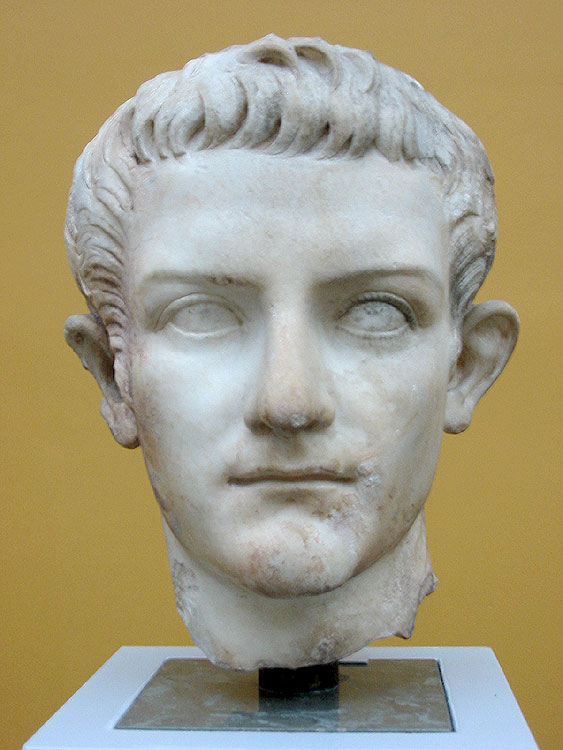
Caligula, the partier supremus.
Take that Chuck E. Cheese.

We Americans like things short and sweet: the average sitcom is 22 minutes long, excluding commercials, for example. You could say we like our fun in manageable doses. On the other hand, modern-day Italians, like their Roman predecessors, can't seem to get enough of a good thing. Even, apparently, when it turns into a bad thing. Just think, in the time it took for this rather Wonka vs. Kurtz kiddie melodrama to play itself out, La Traviata could have been staged twice.

They say nothing's over til the fat lady sings. Here in Italy, the fat lady sings--and sings, and sings (or even shouts vaffanculo! to 7 year-olds)--but that don't mean it's over.


Yours from the Tuscan trenches,

Campobello


Thursday, October 04, 2012

Impressions: ripples in a pond, and some thoughts on raising children in Italy


Dear Readers,

I've been uncharacteristically silent a long while, I know. Change is in the air, and I suppose I've been on mental (as well as physical) vacation from Italy and the expat rat-race. I still have plenty of stories about life on this cockamamie peninsula, but whether or not they will all get told within the space of this blog--whose days, I fear, are numbered--remains to be seen.

I had the good fortune to spend another summer in Portland, Oregon--three whole months this time. Goodness, how that place grows on you! We've decided to make it our next port of call, and plan on moving away from Florence and the in-laws (very important) as soon as this school year finishes. A brand-spanking new chapter in our lives yaws before us like a genial, benign blue whale--and we can't wait to let it swallow us whole.


***

His cardboard sign read "Free: smiles, kind words, listening, hugs. Just ask!" The scruffy, blissed-out young man sitting cross-legged on the pavement on Hawthorne Ave regarded us passers-by with unmitigated good will.

"How ya doin', Sister?" smiled the young guy holding a can of beer, sitting on his steps with the sun on his face. "You have a good one now." Okay, he was probably drunk off his ass, but how could a smile not overtake my mouth?

The cashier at the supermarket said to me after taking my money, "Have a great day. Thanks for shopping with us!"

The 15 Belmont bus driver, all smiles, catapulted out of his little cubicle to help the young mother struggling with newborn, gargantuan diaper bag and chariot-sized stroller off the bus, while I struggled to scrape my lower jaw off the floor.

Small-talk. Casual pleasantries with strangers. A kind word here and there. Gracious bus drivers. Polite postal workers. Everyday people paying it forward in countless small ways. It all made me realize how much I've gotten used to casual indifference, systematic abuse, stony faces and disdainful scowls at the hands of petty Italian functionaries, cashiers, receptionists, shop-workers and the like. Really, at times living in Florence feels like being an unwilling participant in a Mean Contest, with each Italian contestant trying to outdo one another in churlishness. In the face of such daily--and, I would add, altogether unfathomable and unnecessary--unpleasantness one gets to feel utterly beaten down. It just makes everything so exhausting, and it all seems so utterly pointless, though I suppose so many Italians in positions of "power" act like jackals with PMS because it makes them feel good about themselves in some way. Or they're all sadists. In any case, that mantle of negativity is tough to shake off. In Portlandia--admittedly famous for the preternatural friendliness of its locals--I was often rendered nigh speechless by the unwarranted kindness and good-naturedness of strangers. It made me feel good. Put a spring in my step (turns out a smile IS contagious!). And more importantly, it made me feel human--whereas endless interactions with surly Italians makes me feel like something that ought to be scraped off the bottom of their shoes. 

If our actions are like ripples in a pond, then kindness and friendliness make the pond worth diving into. Don't you think?

ancient buddha, photo by David Smeaton

I was once told that the reason a rather sizable Buddhist community exists in and around Florence (my hairdresser's a Buddhist, for example) is because it's such a center of negative energy--as if it bubbles up here from some malign source deep in the earth's magma--and that the Buddhist prayers and presence are necessary for offsetting it. Buddhist ripples in the old, stagnant Florentine pond.

Which led me to think about the omphalos. An earthly navel, as it were, according to the Greeks. The center of the world, a godly orifice, a portal. If Florence is a kind of omphalos of negativity--a bizarro navel crouching in its Apennine-encircled conca--then Portland sure feels like its opposite: the center of positive vibes and creative energy.


***

I look around me in Florence these days and I see so very many old people. So very, very many. Nothing against 'em, of course, but it makes for a fusty country that resists change and modernity with all the tenacity of a moth-ball-ridden old biddy clutching her support hose, glycerin suppositories, and tessera sanitaria. It makes for a country that, though it wrote such a splendid history for itself, is unable to outline a future because who cares, it'll soon be dead anyway. It makes for a country that feels more and more like a giant, albeit artful casket that needs to be buried posthaste before its contents begin to smell. Italy is a country that recklessly squanders its most precious natural resource: its young people. They are its most wasted potential. But, compared to the old folks who doggedly run the show and refuse to give up the ghost, there are relatively few young people to make Italy's history anew, even if they were equipped or inclined to do so.

The low birth-rate here is no secret. And I wonder about the reasons for it. While there are doubtless many factors--economic considerations being perhaps primary--I think the "Great Italian Bambino Paradox" is at the heart of it. On the one hand, Italians adore children--they are petted and fussed-over and cherished--enthroned is a better word--and encouraged to live at home for most of their adult lives. But on the other, very little is done for children and young people by the various governing bodies to enrich their lives and give them opportunities for growth and experimentation. Schools are bare-bones basic--with education varying in quality, just like anywhere--offering almost nothing by way of art, music, computer sciences, or sports (the concept of "extra-curricular" does not exist; hell, my kids don't even have toilet paper in their school). Nothing much to set the imagination aflame. It surprises me that in a country with such a rich artistic and musical heritage, little is done to foster this kind of creativity in children. In summer, kids' brains are left to lie fallow; cities do not offer activity programs, the centri estivi being an expensive, limited-term day-care option only. But it goes deeper than that. There is no overarching gestalt that puts a high value on the renewable energy that is the youthful outlook, the natural eagerness to see and do, the drive and fresh perspective that each age of humankind calls for. No wonder people don't feel like having babies.

Perhaps because of this decided lack of appeal to their imaginations, there seems to be some sort of malaise that afflicts many Italian schoolchildren at some stage in their academic life. And doubtless because of this, relatively few are motivated to go on to achieve college degrees. Of course, perhaps they think why go to college? Jobs are won not by merit but by who you (i.e. your family) know, and career success/recognition/advancement doesn't depend on individual achievement but again, on those many-tentacled familial connections. (The national motto really ought to be "Nepotism, Protectionism, and Cronyism--Evviva!"). The stagnant economy, corrupt politics, overburdened social security system (which treats old-timers like sultans and newcomers like buggered whores) and the decrepit machinery that is Italian labor law doesn't help matters, of course. With all these obstacles, it's easy to understand how apathy can take root, and I think it's safe to say that a kind of collective weltschmerz (see how cool-sounding German words roll off my virtual tongue today?) has overtaken the majority of Italian youth, whether they realize it fully or not. In fact, a point has been reached where intelligent, educated and energetic young Italians are leaving the country in droves to seek their fortunes elsewhere--Godspeed, I say. Meanwhile, the graying of the piazzas continues apace, and there's that electric-charged hush in the air as if before some kind of cataclysmic tempest or götterdämmerung (sorry).

Italy is not a place in which to be young.


A fresh perspective: Portland, omphalos of the Pacific Northwest


Portland feels so invigorating by comparison. Young people are everywhere, young parents toting their two, three and four children about, hipsters young and old crowding the outdoor tables of beer gardens and eateries, everyone seemingly so up on the latest technology and freshest ideas in everything. The place hums with creative energy, a vibe that can only be described as "happening," and an exuberant physicality typically exemplified by the enthusiastic and ubiquitous adoption of the bicycle as the preferred mode of travel. I could not help but fall under the spell of this evergreen Shangri-la. I realize that I have perhaps painted Italy in shades of rather stark black and white, and of course nothing in the world is either--subtle gradations are everywhere, good and bad make strange bedfellows but bedfellows they are, and exceptions take exception to being forced to abide by the rules. But in the end I decided that I don't want my children living in a place where they're so powerless to shape their future (two strikes against Gemma because she's female), where they're not encouraged to think outside the box and experiment because, for one thing, nothing could ever possibly come of it*, where enrichment opportunities are are so scarce, and where their precious youth counts for so little. So we're going.

Change is good. Change is needed. We need it; I need it. Time to splash around in this stagnant old pond and seek new shores upon which to stake our claim to happiness. There are risks, there are unknowns. Che sarà and all that. But to paraphrase the Bard: bless us, bless us indeed--we're about to be translated.


My best regards,

Campobello

* I read a very thought-provoking piece in an Italian newspaper a while back detailing the reasons why Italy could never grow its own Steve Jobs. Essentially it said that any potential innovator must overcome the twin evils of a pervasive defeatist mentality and a ponderous, ham-fisted bureaucracy. Double-barreled death to entrepreneurialism assured. Plus broadband here sucks.


Friday, March 09, 2012

The (un)making of the Italian man

Dear Readers,

Who doesn't like them? And who wouldn't want to have one (at least every now and then)? I'm talking about Italian men, of course.

A group of multigenerational Latin lookers
source: magtrends
They're well-tailored and stylish and typically fit at any age. They have great taste in shoes. They preen and strut like feral peacocks--though at the same time they're sweet and rather boyish. They enjoy good food and know about wine, but they don't get drunk and sloppy (if they make fools of themselves, they tend to do it sober). Yet for all their undeniable, perennial, animal allure, there's a dark side to the Italian man. There's definitely a dark side.

And this is it: behind every handsome, fashionable, charmingly bestubbled, motorino-revving Italian man are two women: the mother who ruined him and the wife who makes excuses for him. Both should be shot.


Pictured here is Captain Francesco Schettino, the man whose ego, irresponsibility, and lack of intestinal fortitude allegedly caused the recent Costa Concordia disaster which claimed so many lives. While I'm not saying that he typifies Italian men (after all, every nation has its moral and intellectual laggards), I'd argue that he's the inevitable product of certain cultural tendencies in Italy, and it is this culture--from whence such a lily-livered lounge lizard springs--that I'd like to explore. I'll begin with a few vignettes from personal experience.


***

When my Italian nephews were in high school, they used to come over to my MIL's house every day after school got out for a hot lunch, since their own mother was at work. She would have the table set and their primo of pasta ready as soon as they dumped their backpacks on the floor and flopped into their chairs. They'd flick on the TV and zone out to anime cartoons while she busily set the food in front of them, then she'd scurry back into the kitchen to prepare their secondo and side dishes while they wolfed down their pasta. If they needed a napkin (which were located in the sideboard about three feet from where they were sitting), they'd call out, "Nonna! Napkin!" and she'd scuttle out to get it for them and then scuttle back to her hissing frying pans. If she'd forgotten to give them a lemon wedge for their fish, they'd call out, "Nonna! Limone!" After they'd been served their last course of ice cream or fruit, they'd reluctantly switch off the TV, rise from the table with a carefree adolescent burp, volley a "ciao" towards the kitchen where the chintz-swathed MIL was vigorously scrubbing pots, and saunter out of the house--leaving the table strewn with dirty dishes, bread crumbs, spilled water, and orange peels.

I never saw these boys--who are as sweet as bomboloni, mind you--take out the garbage, or hang a load of laundry up to dry, or do any chores whatsoever around the house, and both of their parents work full-time. They always wore trendy jeans and sneakers, had cell phones, ample allowances, and rode to school on their own mopeds (one of them even had an additional motocross bike, just for fun)--which is fine, of course. It's just that nothing was ever expected of them in return. Their mother pampers them--still--even more than their nonna, treating them like babies who can barely be trusted to feed themselves or wipe their own behinds. When one of them--at age 21--was horsing around in front of his girlfriend and destroyed our large outdoor storage bin, my husband waited a week in vain for the young man to at least apologize before confronting him and letting him know that we expected it to be replaced. Rather than deal with it himself, his mother (my sister-in-law) knocked on our door and proffered €50, and somewhat in a huff said, "Matteo è rimasto male [is upset at being chastised]. After all, he's only a boy."

***

One of my husband's old school friends from the neighborhood, Guido, separated from his wife some years back. A 46 year-old father of two, he had a good job and a good income by Italian standards, and drove a late-model BMW. As nearly always happens in these cases, he moved back in with his parents and into his old bedroom, sleeping on the narrow twin bed of his childhood. His mother prepares all his meals, does his laundry, presses his shirts for work, and tidies his room--exactly as she used to before he married.

*** 

Okay, this isn't relevant but
I personally have a real thing for Carabinieri ;-)

***

Another twenty-something nephew of mine recently landed a decent job with a much-coveted permanent work contract. He has a longtime girlfriend and they talk of getting married. Since boyhood he's been sharing a 7 x 10 foot bedroom with his slightly younger brother and his sister who's younger by some 10 years. He still sleeps, contentedly, in the cramped upper tier of a bunk bed which is crammed into the suffocatingly close space, stuffed as it is with the beds and bulky wardrobes and computer desks of two grown young men and a 15 year-old girl. But there was no question of him moving out--instead he bought himself a new car.

***

One of my brothers-in-law who has two kids has never changed a diaper. (I'll pause to let that sink in fully). Another brother-in-law, once it was established that his gag-reflex was too pronounced, poor thing, never had anything more to do with the diapers, illnesses, or potty training (or much else related to child-rearing) of his three children, even though his wife, like most Italian women these days, works. A third brother-in-law--the one who lives across town--brings his laundry over for my MIL to do when his own wife is away, and insists on dragging his wife and daughters to the MIL's every weekend for a big lunch prepared by mamma's loving hands, even though her age and ailments make this an increasingly difficult burden. (And when the nonni moved into their small granny unit, this same brother-in-law insisted they keep the enormous refectory-style dining table--even though it makes their dwarf-sized salottino impossibly cramped--so he could dine in accustomed comfort on the weekends).

***

Laura, an Italian mom with whom I'm friendly--our sons go to school together--recently separated from her husband. She confided that for years her husband has simply not been "present" in the marriage (incidentally I've had one other friend and a hairdresser say the same thing about their husbands. They both chose separation). Like so many Italian men, he prefers to hang out at the coffee bar or soccer stadium, or surf the Net or peruse the Gazzetta dello sport, and tends to get restless and bored when forced to hang out with wife and child. He also seems to have had a dalliance with another woman (and the fact that she was a foreigner, to boot--a Filipina--counted as another black mark against him). And yet, like so many Italian men, he expects to find the cupboards and fridge full of food and his dinner on the table every night, his clothes laundered and pressed, and his child scrubbed, homework done, and ready for bed. Well, she'd finally reached her limit, telling me that she already has one kid to look after so why should she want another, one who's 40 years old? But marriage is a two-way street, of course, and knowing how Italian drivers are I think we can allow for a fair amount of  irrational behavior on both sides: in fairness, I have to say that all this woman does when she's not at work is clean her house (or the car, or the stairwell of the building, or the persiane). Seriously. Her house reeks of Lysol. Once when I was over there and she was attempting to converse while frantically scrubbing down the kitchen like some disinfecting dervish, her husband said to me, "Look at her! She's constantly cleaning; it's a sickness." Apparently her own presence in the marriage was up for debate. Anyway, she sent hubs packing and, in typical fashion, he moved back in with his parents.

Too close for comfort? This same mom recently gave her 10 year-old son an enema because "l'intestino era bloccato" (the poor little guy vomited afterwards). And now the two of them live like happy newlyweds in their cozy little love nest, without that pressed-jeans-clad non-entity of a husband casting a pall over the house, and she can coddle her precious, wavy-haired boy to her hearts' content for many long years to come.


'Smother-love

Mammoni. We've all heard this term with regard to Italian men: mamma's boys. One thing's for sure, they don't exist in a vacuum; behind every Italian man there's an unbroken line of Italian mammas, nonnas and bisnonnas reaching back in time through conquests and cantos to the peninsula's murky origins. These are the apron-clad culprits who've perpetrated the irreparable warping of long, spooled chains of psychological DNA for generations of Italian men. From cradle to grave, by mother, wife, and eldest daughter--Italian males are pampered and spoiled, shielded from reality and consequences, and their behavior--no matter how outrageous--indulged. If my MIL is sick or otherwise absent, the FIL--who's in robust health--has his meals prepared and his clothes laundered by some female family member. He never, ever goes to the supermarket or picks up his own prescription meds. He certainly never participated in any of the child-rearing or care of invalid relatives (even his own wheelchair-bound mother)--that was solely women's work. In short, he--like so many other Italian men--has been kept in a child-like, irresponsible state, frozen in a kind of carefully cultivated uselessness and degenerative ineffectuality. I often think how surreally wonderful it must be to go through life like an Italian man--a pasha who merely has to sit down at table and a three-course meal magically appears. And when one has eaten one's fill, all one has to do is arise and go on to other pleasant diversions and let the scullery maid (i.e. the wife) worry about such trivialities as cleanup. And to have all one's clothing washed and ironed and neatly folded and arrayed in one's dresser or wardrobe--not knowing if elves or sprites did it, or one's tired, old, long-suffering handmaiden. And not really being bothered to care either way.

How can such men--grown out of this nascent ooze of medieval manhood--become fully functioning husbands and fathers and students and employees and managers and politicians? How can they become contributing partners in marriages, in companies, in the governing of a nation? How can they be counted on to do the just, right, selfless thing when the ship is sinking? How can they be proper lovers--real soul mates--or innovative entrepreneurs or resolute leaders of men when they can't even boil water for pasta?


The slimy shirker extraordinaire

Francesco Schettino comes from the small town of Meta di Sorrento, near Naples. In the aftermath of the disaster, journalists deluged the town and interviewed locals regarding the erstwhile captain's character. Not surprisingly, his wife vociferously lauded his prowess in all fields, and rose to the defense of his integrity and bravery. The local priest followed suit, proclaiming Schettino's unquestionable virtues, while asserting that the overly-aggressive northern journalists and media were demonstrating an age-old prejudice against Neapolitans specifically and southern Italians generally. In other words, the usual battery of excuses was invoked for a man who has doubtless been pampered his whole life and whose rectitude lies limp and flaccid within the starched, molly-coddled confines of his metaphysical Jockeys.


Adorable. But remember: they either live with their mommies or their wives.
Who do you think ironed their underwear?

Insomma, though there exist some notable exceptions, Italian men are like Italian fashions: lovely to look at and to drape over one's body--with some mighty fine detailing and workmanship--but which, alas, usually prove utterly impractical in the end. With every new season, they become obsolete. They become, regrettably, those rather embarrassing choices pushed far to the back of the closet.


Yours,

Campobello

*For a fun, informative and spot-on romp on the subject of Italian men, check out Sara's post at When in Florence.