Monday, October 22, 2012

And the fat lady sang her ass off


Dear Readers,

Italians seem to have a penchant for things that go on and on: Mass, Sunday lunch, red tape, opera, the shelf life of politicians. So I guess I shouldn't have been surprised when I discovered that the average children's birthday party here in the Boot lasts a good 4 to 5 hours. Seriously. I have two kids in elementary school, a boy in fifth grade and a girl in third, and between them they've racked up enough hours at feste di compleanni to qualify for two master's degrees, a Ph.D, and a diploma from bartending school.

On quizzing my American friends, I found out that Stateside kiddie parties last 2 hours max. My ever-practical compatriots, you see, know that overlong exposure to gargantuan amounts of sugary snacks and drinks combined with the metabolism, energy level and excitement threshold of 7-year-olds is like putting a hand grenade in a Hot Pocket. You don't wanna be there to pick up the grisly pieces.

Indeed. This past Saturday, my daughter Gemma attended a classmate's birthday party that degenerated into the kind of chaos normally associated with nineteenth-century wilderness explorers who haven't seen civilization for months, have eaten too much whale blubber, and have too many firearms at hand. The first three hours went smoothly enough, with the kids indulging in gastronomic excesses worthy of ancient Rome and gamboling gleefully around the garden--as if in Charlie's Chocolate Factory--devouring an avalanche of panini, potato chips, candy, chocolates, muffins and cake, washed down with rivers of Fanta and Coke.

Well, cut to Lord of the Flies. The happy gathering went all Darwin and a massive brawl broke out--kids pummeled one another, pushed and shoved, got knocked backwards over chairs, pulled hair, attempted to strangle one another with sticky hands. It was Caligula meets the Three Stooges. The fiasco ended with a hearty "vaffanculo!!!!!" shouted over the roiling, sneaker-clad melee by a 7 year-old Napoleon hopped up on fructose, and much of the group in tears. The host father--it was his first party--was found hiding in a corner of the kitchen, ashen and babbling, "I did all I could, I did all I could, I did all I could, oh god."


My daughter, pre-holocaust


Gemma--in that strange, amnesiacal way children have--looks back on the event and says it was fun. She refuses to even look at anything sugary, however, and if you need an indication of the unprecedented nature of this phenomenon, let me say that if the dinosaurs possessed some sort of jurassic sweet tooth, my daughter would be among the T-Rexes. I expect it won't last long, though. Unlike that party.


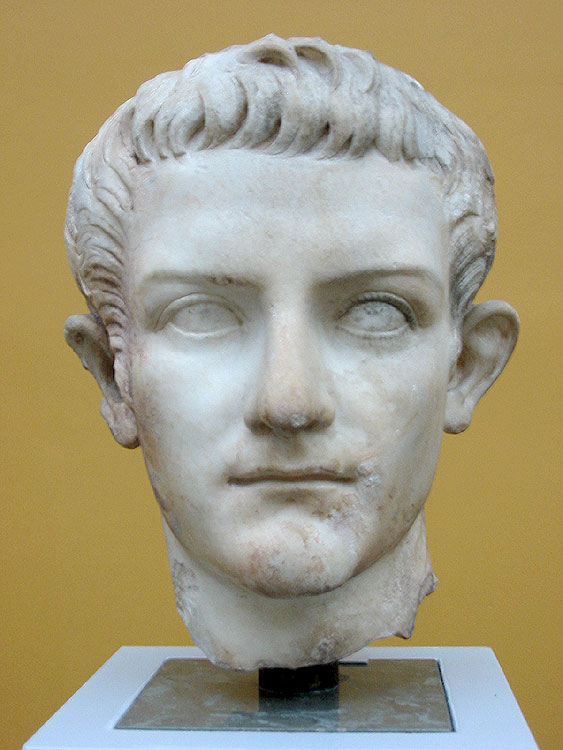
Caligula, the partier supremus.
Take that Chuck E. Cheese.

We Americans like things short and sweet: the average sitcom is 22 minutes long, excluding commercials, for example. You could say we like our fun in manageable doses. On the other hand, modern-day Italians, like their Roman predecessors, can't seem to get enough of a good thing. Even, apparently, when it turns into a bad thing. Just think, in the time it took for this rather Wonka vs. Kurtz kiddie melodrama to play itself out, La Traviata could have been staged twice.

They say nothing's over til the fat lady sings. Here in Italy, the fat lady sings--and sings, and sings (or even shouts vaffanculo! to 7 year-olds)--but that don't mean it's over.


Yours from the Tuscan trenches,

Campobello


Thursday, October 04, 2012

Impressions: ripples in a pond, and some thoughts on raising children in Italy


Dear Readers,

I've been uncharacteristically silent a long while, I know. Change is in the air, and I suppose I've been on mental (as well as physical) vacation from Italy and the expat rat-race. I still have plenty of stories about life on this cockamamie peninsula, but whether or not they will all get told within the space of this blog--whose days, I fear, are numbered--remains to be seen.

I had the good fortune to spend another summer in Portland, Oregon--three whole months this time. Goodness, how that place grows on you! We've decided to make it our next port of call, and plan on moving away from Florence and the in-laws (very important) as soon as this school year finishes. A brand-spanking new chapter in our lives yaws before us like a genial, benign blue whale--and we can't wait to let it swallow us whole.


***

His cardboard sign read "Free: smiles, kind words, listening, hugs. Just ask!" The scruffy, blissed-out young man sitting cross-legged on the pavement on Hawthorne Ave regarded us passers-by with unmitigated good will.

"How ya doin', Sister?" smiled the young guy holding a can of beer, sitting on his steps with the sun on his face. "You have a good one now." Okay, he was probably drunk off his ass, but how could a smile not overtake my mouth?

The cashier at the supermarket said to me after taking my money, "Have a great day. Thanks for shopping with us!"

The 15 Belmont bus driver, all smiles, catapulted out of his little cubicle to help the young mother struggling with newborn, gargantuan diaper bag and chariot-sized stroller off the bus, while I struggled to scrape my lower jaw off the floor.

Small-talk. Casual pleasantries with strangers. A kind word here and there. Gracious bus drivers. Polite postal workers. Everyday people paying it forward in countless small ways. It all made me realize how much I've gotten used to casual indifference, systematic abuse, stony faces and disdainful scowls at the hands of petty Italian functionaries, cashiers, receptionists, shop-workers and the like. Really, at times living in Florence feels like being an unwilling participant in a Mean Contest, with each Italian contestant trying to outdo one another in churlishness. In the face of such daily--and, I would add, altogether unfathomable and unnecessary--unpleasantness one gets to feel utterly beaten down. It just makes everything so exhausting, and it all seems so utterly pointless, though I suppose so many Italians in positions of "power" act like jackals with PMS because it makes them feel good about themselves in some way. Or they're all sadists. In any case, that mantle of negativity is tough to shake off. In Portlandia--admittedly famous for the preternatural friendliness of its locals--I was often rendered nigh speechless by the unwarranted kindness and good-naturedness of strangers. It made me feel good. Put a spring in my step (turns out a smile IS contagious!). And more importantly, it made me feel human--whereas endless interactions with surly Italians makes me feel like something that ought to be scraped off the bottom of their shoes. 

If our actions are like ripples in a pond, then kindness and friendliness make the pond worth diving into. Don't you think?

ancient buddha, photo by David Smeaton

I was once told that the reason a rather sizable Buddhist community exists in and around Florence (my hairdresser's a Buddhist, for example) is because it's such a center of negative energy--as if it bubbles up here from some malign source deep in the earth's magma--and that the Buddhist prayers and presence are necessary for offsetting it. Buddhist ripples in the old, stagnant Florentine pond.

Which led me to think about the omphalos. An earthly navel, as it were, according to the Greeks. The center of the world, a godly orifice, a portal. If Florence is a kind of omphalos of negativity--a bizarro navel crouching in its Apennine-encircled conca--then Portland sure feels like its opposite: the center of positive vibes and creative energy.


***

I look around me in Florence these days and I see so very many old people. So very, very many. Nothing against 'em, of course, but it makes for a fusty country that resists change and modernity with all the tenacity of a moth-ball-ridden old biddy clutching her support hose, glycerin suppositories, and tessera sanitaria. It makes for a country that, though it wrote such a splendid history for itself, is unable to outline a future because who cares, it'll soon be dead anyway. It makes for a country that feels more and more like a giant, albeit artful casket that needs to be buried posthaste before its contents begin to smell. Italy is a country that recklessly squanders its most precious natural resource: its young people. They are its most wasted potential. But, compared to the old folks who doggedly run the show and refuse to give up the ghost, there are relatively few young people to make Italy's history anew, even if they were equipped or inclined to do so.

The low birth-rate here is no secret. And I wonder about the reasons for it. While there are doubtless many factors--economic considerations being perhaps primary--I think the "Great Italian Bambino Paradox" is at the heart of it. On the one hand, Italians adore children--they are petted and fussed-over and cherished--enthroned is a better word--and encouraged to live at home for most of their adult lives. But on the other, very little is done for children and young people by the various governing bodies to enrich their lives and give them opportunities for growth and experimentation. Schools are bare-bones basic--with education varying in quality, just like anywhere--offering almost nothing by way of art, music, computer sciences, or sports (the concept of "extra-curricular" does not exist; hell, my kids don't even have toilet paper in their school). Nothing much to set the imagination aflame. It surprises me that in a country with such a rich artistic and musical heritage, little is done to foster this kind of creativity in children. In summer, kids' brains are left to lie fallow; cities do not offer activity programs, the centri estivi being an expensive, limited-term day-care option only. But it goes deeper than that. There is no overarching gestalt that puts a high value on the renewable energy that is the youthful outlook, the natural eagerness to see and do, the drive and fresh perspective that each age of humankind calls for. No wonder people don't feel like having babies.

Perhaps because of this decided lack of appeal to their imaginations, there seems to be some sort of malaise that afflicts many Italian schoolchildren at some stage in their academic life. And doubtless because of this, relatively few are motivated to go on to achieve college degrees. Of course, perhaps they think why go to college? Jobs are won not by merit but by who you (i.e. your family) know, and career success/recognition/advancement doesn't depend on individual achievement but again, on those many-tentacled familial connections. (The national motto really ought to be "Nepotism, Protectionism, and Cronyism--Evviva!"). The stagnant economy, corrupt politics, overburdened social security system (which treats old-timers like sultans and newcomers like buggered whores) and the decrepit machinery that is Italian labor law doesn't help matters, of course. With all these obstacles, it's easy to understand how apathy can take root, and I think it's safe to say that a kind of collective weltschmerz (see how cool-sounding German words roll off my virtual tongue today?) has overtaken the majority of Italian youth, whether they realize it fully or not. In fact, a point has been reached where intelligent, educated and energetic young Italians are leaving the country in droves to seek their fortunes elsewhere--Godspeed, I say. Meanwhile, the graying of the piazzas continues apace, and there's that electric-charged hush in the air as if before some kind of cataclysmic tempest or götterdämmerung (sorry).

Italy is not a place in which to be young.


A fresh perspective: Portland, omphalos of the Pacific Northwest


Portland feels so invigorating by comparison. Young people are everywhere, young parents toting their two, three and four children about, hipsters young and old crowding the outdoor tables of beer gardens and eateries, everyone seemingly so up on the latest technology and freshest ideas in everything. The place hums with creative energy, a vibe that can only be described as "happening," and an exuberant physicality typically exemplified by the enthusiastic and ubiquitous adoption of the bicycle as the preferred mode of travel. I could not help but fall under the spell of this evergreen Shangri-la. I realize that I have perhaps painted Italy in shades of rather stark black and white, and of course nothing in the world is either--subtle gradations are everywhere, good and bad make strange bedfellows but bedfellows they are, and exceptions take exception to being forced to abide by the rules. But in the end I decided that I don't want my children living in a place where they're so powerless to shape their future (two strikes against Gemma because she's female), where they're not encouraged to think outside the box and experiment because, for one thing, nothing could ever possibly come of it*, where enrichment opportunities are are so scarce, and where their precious youth counts for so little. So we're going.

Change is good. Change is needed. We need it; I need it. Time to splash around in this stagnant old pond and seek new shores upon which to stake our claim to happiness. There are risks, there are unknowns. Che sarà and all that. But to paraphrase the Bard: bless us, bless us indeed--we're about to be translated.


My best regards,

Campobello

* I read a very thought-provoking piece in an Italian newspaper a while back detailing the reasons why Italy could never grow its own Steve Jobs. Essentially it said that any potential innovator must overcome the twin evils of a pervasive defeatist mentality and a ponderous, ham-fisted bureaucracy. Double-barreled death to entrepreneurialism assured. Plus broadband here sucks.


Friday, July 13, 2012

Cops and salsa

A recent article for the Florentine wherein I discuss vacations, bilingualism, and kids who probably oughtn't watch so much goddamn American television.

Click here to go to article :-)


Yours, truly, currently from Portlandia, USA,

Campobello

Monday, April 09, 2012

The Easter toenail


Dear Readers,

We decided to take to the road on Easter Sunday, picnic basket in tow, and head out to one of those picturesque, ancient Etruscan outposts that punctuate the Tuscan earth like somber stone carbuncles set into silvery-green filigrees of cypress, olive and macchia--that strong-willed, cliff-hugging Mediterranean shrub.

A bit of rain notwithstanding, it was a lovely day, with breezes off the sea washing over our city-dusted bodies and through our thirsty lungs in invigorating, salty blasts. We ate our lunch and cavorted on the beach at the Gulf of Baratti, under the watchful eye of Populonia's old, baleful tower.

Later, in the car, on the way to find some much-needed gelato, Gemma piped up:

"Mommy, you know yesterday when I went to Nonna's? Do you know what she told me?"

I inwardly cringed, imagining something along the lines of Tales of the Illustrious Exploits of Jesus, You're Growing Up a Heathen, or Why a 2-Pound Chocolate Egg is Good for You.

"No, what?" I said.

"She told me that her toenail fell off because it turned all brown and was marcia [rotten, putrid, decayed]."

"Thanks for sharing that, dear."


Of tides and toenails


One would hope the MIL spread the message of the Resurrected Christ with similar enthusiasm.


Yours from the Tuscan trenches,

Campobello


Friday, March 09, 2012

The (un)making of the Italian man

Dear Readers,

Who doesn't like them? And who wouldn't want to have one (at least every now and then)? I'm talking about Italian men, of course.

A group of multigenerational Latin lookers
source: magtrends
They're well-tailored and stylish and typically fit at any age. They have great taste in shoes. They preen and strut like feral peacocks--though at the same time they're sweet and rather boyish. They enjoy good food and know about wine, but they don't get drunk and sloppy (if they make fools of themselves, they tend to do it sober). Yet for all their undeniable, perennial, animal allure, there's a dark side to the Italian man. There's definitely a dark side.

And this is it: behind every handsome, fashionable, charmingly bestubbled, motorino-revving Italian man are two women: the mother who ruined him and the wife who makes excuses for him. Both should be shot.


Pictured here is Captain Francesco Schettino, the man whose ego, irresponsibility, and lack of intestinal fortitude allegedly caused the recent Costa Concordia disaster which claimed so many lives. While I'm not saying that he typifies Italian men (after all, every nation has its moral and intellectual laggards), I'd argue that he's the inevitable product of certain cultural tendencies in Italy, and it is this culture--from whence such a lily-livered lounge lizard springs--that I'd like to explore. I'll begin with a few vignettes from personal experience.


***

When my Italian nephews were in high school, they used to come over to my MIL's house every day after school got out for a hot lunch, since their own mother was at work. She would have the table set and their primo of pasta ready as soon as they dumped their backpacks on the floor and flopped into their chairs. They'd flick on the TV and zone out to anime cartoons while she busily set the food in front of them, then she'd scurry back into the kitchen to prepare their secondo and side dishes while they wolfed down their pasta. If they needed a napkin (which were located in the sideboard about three feet from where they were sitting), they'd call out, "Nonna! Napkin!" and she'd scuttle out to get it for them and then scuttle back to her hissing frying pans. If she'd forgotten to give them a lemon wedge for their fish, they'd call out, "Nonna! Limone!" After they'd been served their last course of ice cream or fruit, they'd reluctantly switch off the TV, rise from the table with a carefree adolescent burp, volley a "ciao" towards the kitchen where the chintz-swathed MIL was vigorously scrubbing pots, and saunter out of the house--leaving the table strewn with dirty dishes, bread crumbs, spilled water, and orange peels.

I never saw these boys--who are as sweet as bomboloni, mind you--take out the garbage, or hang a load of laundry up to dry, or do any chores whatsoever around the house, and both of their parents work full-time. They always wore trendy jeans and sneakers, had cell phones, ample allowances, and rode to school on their own mopeds (one of them even had an additional motocross bike, just for fun)--which is fine, of course. It's just that nothing was ever expected of them in return. Their mother pampers them--still--even more than their nonna, treating them like babies who can barely be trusted to feed themselves or wipe their own behinds. When one of them--at age 21--was horsing around in front of his girlfriend and destroyed our large outdoor storage bin, my husband waited a week in vain for the young man to at least apologize before confronting him and letting him know that we expected it to be replaced. Rather than deal with it himself, his mother (my sister-in-law) knocked on our door and proffered €50, and somewhat in a huff said, "Matteo è rimasto male [is upset at being chastised]. After all, he's only a boy."

***

One of my husband's old school friends from the neighborhood, Guido, separated from his wife some years back. A 46 year-old father of two, he had a good job and a good income by Italian standards, and drove a late-model BMW. As nearly always happens in these cases, he moved back in with his parents and into his old bedroom, sleeping on the narrow twin bed of his childhood. His mother prepares all his meals, does his laundry, presses his shirts for work, and tidies his room--exactly as she used to before he married.

*** 

Okay, this isn't relevant but
I personally have a real thing for Carabinieri ;-)

***

Another twenty-something nephew of mine recently landed a decent job with a much-coveted permanent work contract. He has a longtime girlfriend and they talk of getting married. Since boyhood he's been sharing a 7 x 10 foot bedroom with his slightly younger brother and his sister who's younger by some 10 years. He still sleeps, contentedly, in the cramped upper tier of a bunk bed which is crammed into the suffocatingly close space, stuffed as it is with the beds and bulky wardrobes and computer desks of two grown young men and a 15 year-old girl. But there was no question of him moving out--instead he bought himself a new car.

***

One of my brothers-in-law who has two kids has never changed a diaper. (I'll pause to let that sink in fully). Another brother-in-law, once it was established that his gag-reflex was too pronounced, poor thing, never had anything more to do with the diapers, illnesses, or potty training (or much else related to child-rearing) of his three children, even though his wife, like most Italian women these days, works. A third brother-in-law--the one who lives across town--brings his laundry over for my MIL to do when his own wife is away, and insists on dragging his wife and daughters to the MIL's every weekend for a big lunch prepared by mamma's loving hands, even though her age and ailments make this an increasingly difficult burden. (And when the nonni moved into their small granny unit, this same brother-in-law insisted they keep the enormous refectory-style dining table--even though it makes their dwarf-sized salottino impossibly cramped--so he could dine in accustomed comfort on the weekends).

***

Laura, an Italian mom with whom I'm friendly--our sons go to school together--recently separated from her husband. She confided that for years her husband has simply not been "present" in the marriage (incidentally I've had one other friend and a hairdresser say the same thing about their husbands. They both chose separation). Like so many Italian men, he prefers to hang out at the coffee bar or soccer stadium, or surf the Net or peruse the Gazzetta dello sport, and tends to get restless and bored when forced to hang out with wife and child. He also seems to have had a dalliance with another woman (and the fact that she was a foreigner, to boot--a Filipina--counted as another black mark against him). And yet, like so many Italian men, he expects to find the cupboards and fridge full of food and his dinner on the table every night, his clothes laundered and pressed, and his child scrubbed, homework done, and ready for bed. Well, she'd finally reached her limit, telling me that she already has one kid to look after so why should she want another, one who's 40 years old? But marriage is a two-way street, of course, and knowing how Italian drivers are I think we can allow for a fair amount of  irrational behavior on both sides: in fairness, I have to say that all this woman does when she's not at work is clean her house (or the car, or the stairwell of the building, or the persiane). Seriously. Her house reeks of Lysol. Once when I was over there and she was attempting to converse while frantically scrubbing down the kitchen like some disinfecting dervish, her husband said to me, "Look at her! She's constantly cleaning; it's a sickness." Apparently her own presence in the marriage was up for debate. Anyway, she sent hubs packing and, in typical fashion, he moved back in with his parents.

Too close for comfort? This same mom recently gave her 10 year-old son an enema because "l'intestino era bloccato" (the poor little guy vomited afterwards). And now the two of them live like happy newlyweds in their cozy little love nest, without that pressed-jeans-clad non-entity of a husband casting a pall over the house, and she can coddle her precious, wavy-haired boy to her hearts' content for many long years to come.


'Smother-love

Mammoni. We've all heard this term with regard to Italian men: mamma's boys. One thing's for sure, they don't exist in a vacuum; behind every Italian man there's an unbroken line of Italian mammas, nonnas and bisnonnas reaching back in time through conquests and cantos to the peninsula's murky origins. These are the apron-clad culprits who've perpetrated the irreparable warping of long, spooled chains of psychological DNA for generations of Italian men. From cradle to grave, by mother, wife, and eldest daughter--Italian males are pampered and spoiled, shielded from reality and consequences, and their behavior--no matter how outrageous--indulged. If my MIL is sick or otherwise absent, the FIL--who's in robust health--has his meals prepared and his clothes laundered by some female family member. He never, ever goes to the supermarket or picks up his own prescription meds. He certainly never participated in any of the child-rearing or care of invalid relatives (even his own wheelchair-bound mother)--that was solely women's work. In short, he--like so many other Italian men--has been kept in a child-like, irresponsible state, frozen in a kind of carefully cultivated uselessness and degenerative ineffectuality. I often think how surreally wonderful it must be to go through life like an Italian man--a pasha who merely has to sit down at table and a three-course meal magically appears. And when one has eaten one's fill, all one has to do is arise and go on to other pleasant diversions and let the scullery maid (i.e. the wife) worry about such trivialities as cleanup. And to have all one's clothing washed and ironed and neatly folded and arrayed in one's dresser or wardrobe--not knowing if elves or sprites did it, or one's tired, old, long-suffering handmaiden. And not really being bothered to care either way.

How can such men--grown out of this nascent ooze of medieval manhood--become fully functioning husbands and fathers and students and employees and managers and politicians? How can they become contributing partners in marriages, in companies, in the governing of a nation? How can they be counted on to do the just, right, selfless thing when the ship is sinking? How can they be proper lovers--real soul mates--or innovative entrepreneurs or resolute leaders of men when they can't even boil water for pasta?


The slimy shirker extraordinaire

Francesco Schettino comes from the small town of Meta di Sorrento, near Naples. In the aftermath of the disaster, journalists deluged the town and interviewed locals regarding the erstwhile captain's character. Not surprisingly, his wife vociferously lauded his prowess in all fields, and rose to the defense of his integrity and bravery. The local priest followed suit, proclaiming Schettino's unquestionable virtues, while asserting that the overly-aggressive northern journalists and media were demonstrating an age-old prejudice against Neapolitans specifically and southern Italians generally. In other words, the usual battery of excuses was invoked for a man who has doubtless been pampered his whole life and whose rectitude lies limp and flaccid within the starched, molly-coddled confines of his metaphysical Jockeys.


Adorable. But remember: they either live with their mommies or their wives.
Who do you think ironed their underwear?

Insomma, though there exist some notable exceptions, Italian men are like Italian fashions: lovely to look at and to drape over one's body--with some mighty fine detailing and workmanship--but which, alas, usually prove utterly impractical in the end. With every new season, they become obsolete. They become, regrettably, those rather embarrassing choices pushed far to the back of the closet.


Yours,

Campobello

*For a fun, informative and spot-on romp on the subject of Italian men, check out Sara's post at When in Florence.

Wednesday, February 29, 2012

A bit of dramatic foreshadowing


Dear Readers,

A fellow Italy blogger, Lisa over at Renovating Italy, inspired me with her post 'At the Back of the Beginning' which talks about a rather amazing coincidence regarding a photo taken in Venice long before she'd ever dreamed she'd make Italy her home.

This is a photo of me in my college dorm room at Michigan State, sophomore year, with one of my dearest friends, Kelly B. (who had recently had her own expat experience in Sweden). Forget Kel's über-80's hairdo, and notice the poster on the wall behind us.


In case you can't quite make it out, it's of A Room With a View, and that's Florence's Duomo in the background--little did I know then that one day this famous, eye-poppingly gorgeous cathedral would become a daily sight for me.

The movie came out in 1985, the year I graduated from high school, and I went to see it at a Dearborn theater with another very dear friend of mine, Lisa D. (who would eventually migrate to Chicago). We loved it, of course. And I still feel my soul flap its wings like mad when I hear 'O mio babbino caro.'


We never know where life will lead us, do we, if we're open to adventure?


Campobello

*The wonderful Norwegian soprano, Sissel Kyrkjebø.

Thursday, February 23, 2012

Lessons of via Faentina, part 5 and finale


The street where I live becomes my miscreant muse:
the final installment in a series about quality-of-life issues
in the cradle of the Renaissance.


Dear Readers,

The shards of automobile littered the street and narrow sidewalk. Pieces of black and silver and red plastic, along with bits of metal--the detritus of the latest traffic accident--bore mute testimony to the dangers of via Faentina.

My children and I saw this as we walked to school last week, and I was overcome with a feeling of frustrated resignation. I had just read in La Nazione about another accident, in another part of the city, near several schools, where a mother and her 6 year-old daughter were run down in a pedestrian crossing by an 84 year-old man who claims he didn't see them because of the sunlight shining in his eyes. Analysis showed that he had barely even touched the brakes. Fortunately, the mother used her body to shield her daughter so the girl wasn't badly hurt, but mom suffered various fractures and injuries. Parents gathered around and complained to the reporter about the dangers of speeding traffic in the area, about the perilous nature of the local school/pedestrian crossings, and about the need for speed bumps and other traffic safety measures. The article also highlighted another issue here in Italy that tends to surface when such accidents occur: the ongoing controversy of allowing people over 80 to continue driving. (A couple of years ago, our gate at the bottom of the driveway was mangled by a 90 year-old man who had fallen asleep at the wheel--supposedly--and crashed into it. Luckily none of us happened to be coming or going at the time).

It's all sound and fury, signifying nothing. Nothing will ever change. Accidents continue to happen, people get hurt or killed, there is outrage and complaining, the occasional article appears--and then silence. As far as my little corner of Florence goes--I have written countless letters to Palazzo Vecchio and to the various entities which oversee traffic issues, I have written to both local and national newspapers, I wrote an Op-Ed piece in the local English paper on this issue, and I began this blog series. I've talked to other parents--all of whom complain but none of whom seem willing to band together and do anything (but perhaps they know the system we're up against far better than I).

Italy ranks third in Europe for road deaths involving cyclists (preceded by Germany and Poland), and it's easy to see why--people on bicycles have to share the road with thousands of drivers with very dangerous driving habits who careen through the cities with seeming impunity. Pedestrians, too, as I have pointed out previously, also count for very little in this nation which privileges wheels over human beings.

***

Via Faentina continues to be throttled with heavy, two-way traffic. Years ago, the national railway spent loads of money building a train station (called the Salviati) in the neighborhood, with a huge parking lot--ostensibly aimed at commuters coming in from the north. For reasons perhaps only fathomable to the bureaucrats, it was never used, has been abandoned, and has fallen into disrepair--acting as a playground for vandals, a garbage dump, and a strange gypsy camp for RV's and trucks whose owners appear to live within.


Parking fees no one has to pay


Waiting for a train that will never come


Paths reclaimed by nature


It's a pity--because the views of Fiesole from here are lovely


Salviati changed to "save yourself?"


The wise know when to admit defeat. So, dear Readers, I raise my hands in that universal gesture of surrender and throw in the proverbial Tuscan towel. I don't know what else I can do in terms of "community action." I know that traffic safety in my neighborhood will never improve, that every day I walk my children to school shall continue to be fraught with stress and worry over their safety. My little patch of Italy apparently matters little to the powers that be, and it is no consolation to me in imagining that all the other little patches of this chaotic peninsula share the same fate. It would indeed seem that all one can try and do in the face of such civic indifference is--as the sign above so eloquently says--save yourself, as best you can.


Yours,

Campobello

Thursday, February 16, 2012

The Nonni Economy

Dear Readers,

It's common knowledge that Italy's economy and the policies governing it is a dinosaur that must either evolve or face extinction. Its infamous bureaucracy and age-old professional guilds have more in common with the Middle Ages than the Cyber Age. Its creaking political machinery is overseen by a bloated battalion of decrepit mercenary toads--whose median age is something like 105. Italy has almost zero population growth. On top of this, educated, energetic, and ambitious young people--faced with such dim prospects for the future--are fleeing the country in droves. As a result, living in Italy sometimes feels like living in a gigantic old folks' home--a Renaissance Retirement Village, if you will. Seems you can't throw a cannellini bean here without hitting a smug, sturdy-soled pensioner making her way to the pharmacy--in short, the atmosphere in this confoundingly beautiful country is so fusty, so entrenched in a mildewed past, I sometimes get the feeling that the whole peninsula is but wiping its feet on Death's doormat. If Italy was a patient in the hospital, the prognosis for survival would be grim: in a coma, hooked up on life support, facing a chronic vegetative state. I don't mean to go all Thomas Mann on you, but, along with the heavenly smell of dark-roasted coffee wafting from the bars, the stale reek of an imminent demise is in the air unless something changes drastically.

And yet, if you were to stroll around town and have a look--out there on the streets and in the piazzas--things wouldn't seem all that bad. Plenty of Italians wear expensive, stylish clothes; their children are garbed like midget runway models and have all the latest game systems; they drive late-model cars, an increasing number of which are of the luxury variety or benzina-guzzling SUV's; they are able to throw elaborate birthday parties for their children when the cost of one Fisher Price toy runs something like €40 ($52); they take costly vacations to the beach or to the mountains; many eat out at ever-more-pricey trattorias and pizzerias; they smoke--a lot (and cigs cost between $5-6 a pack). Strolling around thus, you might be tempted to think that surely matters can't be very dire at all. You might even be tempted to believe what Berlusconi--that pancake-faced charlatan--was insisting all along, that everything's swell and Italy's economy is as strong, solid, and vigorous as a blowhard politico pumped-up on Viagra.

So what lies behind these disparities, then? I call it the Nonni Economy.


Nonni are a silent, quasi-mythic force
here in Italy; they're the unglamorous, varicose-veined legs on which the entire country stands. They're the grandparents who stuffed their wool mattresses with money for decades, who lived like closefisted clerics, who scrimped and hoarded all they could and avoided debt of any kind. They bought property back when it was relatively cheap--usually crappy ancient apartments with sporadic plumbing or crumbling case coloniche. They darned their socks and knitted their own sweaters. They worked two jobs or more and took care of scores of children and invalid relatives all living under the same leaky roof. Thanks to them, most Italians (that is, those who aren't still living at home with their parents) now have homes--restored, of course--for which they never had to pay (I read somehwere that something like 85% of Italians neither pay rent nor have a mortgage, which is why there was never a real estate bubble to burst). That means extra money to spend on la dolce vita, of course. As a rule Italians still eschew debt, particularly personal debt--but this may have more to do with the national sport of tax evasion and the penurious character of banks than any inbred distaste for owing money. (Leaving a paper trail for the tax man is, for many Italians, like leaving a trail of pork loins for a rapacious wolf).

Some cold, hard facts

Consider that the average Italian monthly net income for a full-time job is about €1300 (or $1700). Consider that pay raises in Italy happen only when Saturn is in the fourth moon of Jupiter's house, when Hell turns to hazelnut gelato, or when pigs get their pilot license. Consider that the cost of living in Italy keeps rising alarmingly--with prices on utilities, gas, over-the-counter drugs and staple foodstuffs such as bread, pasta, coffee and milk experiencing dispiriting jumps. Consider that the average rent for a two-bedroom apartment in Florence (should you be one of the unlucky few without nonni to gift you property)--outside the historic center, of course--is €1000-1200. My husband and I are unfortunately among that small percentage who pay a mortgage, and it's a fairly modest one at around €1000 a month. Consider that an elementary-school child's mensa, or school lunch, bill is a good €98 (or $130) per month, unless you qualify for low-income reductions. Consider that the average monthly grocery bill for a family of four is about €375. Consider utilities, including garbage removal, which are all much, much higher than their American, bargain-basement-priced counterparts. Consider that gas costs about €1.80 per liter or the equivalent of about $8 per gallon. Consider that a monthly bus pass costs €35 ($45). There is universal healthcare but consider that the co-payments (or i ticket, as they're called) required for many visits, exams, and analyses can cost up to €38 (or about $50) a pop.

If, in considering these figures, you're beginning to wonder how an average family can get by much less demonstrate all the seductive trappings of Italian life on display in the piazzas, you're not alone--I've always wondered the same thing. (And it seems the new PM Mario Monti is wondering, too). For instance, my husband and I really struggle, and I know others in the same boat. We've seen our income dramatically dwindle in purchasing power over the last ten years (granted, we've since had two children, but even given that, we're worse off now than before*). This year we had to forego after-school activities for our kids. We both commute and run most errands by bicycle to avoid the costs of gas and bus fares (anyway, it's healthier and better for the environment, right?). We have one basic PC, two cell phones of the decidedly unsmart variety, a car that is 20 years old (and was recently awarded "antique" status--thereby qualifying us for cheaper registration rates, amen). We took out a small loan to pay for our last summer vacation. We rarely go out to eat or spend on trifles. The lining in my winter coat is being held in place by a safety pin and I haven't seen the inside of a salon in a year. I'm not complaining--it's just the way things are.

But it just doesn't add up, does it? Which means that...


La dolce vita is clearly not about doing the math

Italians tend to perceive well-being in different terms than, say, Americans. Not having much personal debt is part of it, but I think that the biggest thing contributing to Italian complacency is the family--and specifically, all the boons bestowed upon the current crop of citizens by their nonni or other elderly, hard-working relatives.

The family unit has always been the building block of Italian society--we all know this. It is typically the source of all security, both economic and emotional, and it is the fruits of these nonni's and bisnonni's thrift which are being enjoyed by many of their descendants today. Though it's hard to quantify the effects of the Nonni Economy, it does create a sort of protective bubble around many Italian families that makes them feel and appear more prosperous than they might be if left to truly fend for themselves amidst the tempest of market forces. It encompasses certain antiquated practices as well, such as the predilection for trade or cash-only transactions and the rather, ahem, creative accounting that results.

                                                             
Italy's low birth-rate certainly contributes to the semblance of being better-off (if you don't have kids or have only one, obviously there's more money to spend on yourself or more to lavish on that figlio unico). But even many one-child households would be strapped if it weren't for the financial safety net provided by grandparents. The ever self-sacrifing elders of the Nonni Economy also provide less tangible benefits, the main one being unlimited free child care for their grandchildren. Put yourself on any street corner or in front of any elementary school and watch the endless to and fro of grandparents shepherding their young charges. They often function as full-time maids as well as babysitters, providing meals and even doing the laundry, ironing, and grocery shopping--a huge help to working parents. In addition, many provide gifts of cash or clothing--or even pay for cars or settimane bianche (ski vacations) for their grown children, and swim lessons and scuba gear for their grandchildren. Mind you, I am not talking about wealthy people--these nonni are ordinary folks who have managed to squirrel away significant savings, accrue zero debt, and have healthy pensions to live on. They have the lifelong habit of near-zero consumeristic consumption (why, merely turning on an electric light is considered an act of fiscal profligacy), which in turn enables them to lavish spending on their far more materialistic (and often more economically pinched) children and grandchildren.

To their credit, most Italians--whatever their economic status--find contentment in their little daily rituals of coffee and well-prepared meals; in socializing with the small circle of friends that they've known since childhood; in dolling themselves up in their best duds and strolling around town, stopping for an espresso or gelato or to gawk at shop windows. If these things remain unchanged, and if the overall health and well-being of the family is intact, then Italians generally feel themselves to be doing just fine.


How did they do it again?


As the recent rash of Monti raids has proved, tax evasion in Italy is rampant, pervasive, and often considered a kind of sacred duty--making it, and not Roman Catholicism, the real religion of the Italian people. For instance, it's common practice when inquiring about the cost of a service--say a teeth-cleaning--to be given two options: "85 euro with receipt, 60 euro without." (Now that the sober-faced Monti has put the fear of God into everyone, I'm curious to see if this will change).

So if today--with the albeit lackluster use of credit and debit cards, with computers and electronic banking--Italians are able to conjure financial smokescreens on such an epic scale, imagine what many cagey nonni were able to accomplish in their day? (My FIL, for example, worked three jobs but only ever declared income on one). This is not to diminish at all their hard work and penny-pinching ways--but you have to wonder if, along with a lot of choice real estate, the current generation of Italians has inherited public coffers that were already suffering from acute anemia.

What does all this mean for Italy's future? Given the nature of this Nonni Economy--the fact that frugality seems to be a lost art, that these traditionally selfless nonni will eventually die out--and the zeal with which Mr Monti is pursuing scofflaws, is the current brand of Italian-style "sweet life" a tenable one for the times to come?

Or will Thomas Mann indeed have his day?


Yours,

Campobello

* check out this article on Italian earnings

Saturday, December 31, 2011

Happy Anus to all!

Dear Readers,

When I first moved to Italy and was in the throes of learning the language, I made quite a few rookie mistakes (actually, I still make rookie mistakes, though--I like to think--with a certain amount of flair). One of which was in wishing those around me a 'Happy New Year.' Buon anno, as you can see, has an all-important double 'n' in the second word of the phrase. Italian is a lovely language, but one of slavish pronunciation--if you don't get it exactly right, you risk morphing the entire meaning.

To wit: you must absolutely and emphatically enunciate that double 'n' sound, or you are--in reality--saying "Happy Anus" (single 'n' = ano = you-know-what). So that first capo d'anno in the Bel Paese I went around wishing pretty much everyone's nether orifice well.

But, you know, after ten years here, my early malapropism seems strangely prescient. With the recent austerity measures ('austerity' being a euphemism for 'screw you'), many Italians feel they're being forced to, ahem, take it up the derrière. Nowadays, wishing someone a happy anus doesn't seem like such a bad idea after all.

Well, let's not dwell on the negative--best to face these things with a champagne flute filled with good cheer, no? So let's raise our virtual glasses and have a toast:

My very best wishes for a Happy New Year (she said)
Though it's likely we'll be buggered in the months ahead


Counting my blessings,

Campobello

Wednesday, December 21, 2011

Lessons of via Faentina, part 4

The street where I live becomes my miscreant muse:
the fourth installment in a series about quality-of-life issues
in the cradle of the Renaissance.

Dear Readers,

The usual mayhem continues. Last week, while walking home from school with my children, a large panel truck--when faced with tight oncoming traffic--decided to jump the curb right alongside us without consulting his side-view mirror, nearly flattening us into American pancakes. My hearty curses rang out along via Faentina, the crossing-guard vigili down the street a-ways glanced in my direction--and did nothing.

Recently, this sign appeared on our little 33-inch sidewalk:


It says "sidewalk in disorder." Indeed. And no wonder--heavy trucks and buses routinely avail themselves of it, making it perilously pockmarked and uneven. One of these days some old Signora on her way to the pharmacy is going to stumble and wind up under the wheels of the 1A. I don't know why this sign should suddenly appear--the sidewalk has been in ruins for the ten years I've been living here. Could it have something to do with my recent letters of complaint to the City? (Ha! That's a good one). Are they covering their precious Florentine asses in case someone does, indeed, get maimed or killed? Of course, some nincompoop didn't notice that the sign itself takes up half of the already miserly sidewalk, rendering it even more pericoloso.

No one cares about how you experience your neighborhood or your city, so why should you?

The great civic apathy of this place has been one of the most difficult things for me to adjust to as an American. And it creates a vicious circle: the city doesn't give a ripe, flying fig about the daily livability concerns of its citizens, so the citizens in turn treat their city like a lawless dump--graffiti, garbage, litter, dog droppings, and vandalism are rampant. Traffic and parking laws are wilfully, routinely--even gleefully--ignored because it's quite clear it's every man, woman and child for themselves out there in the Renaissance jungle. Citizens who do voice their concerns are ignored or even denigrated. I've seen other parents expressing their anger and frustration to the vigili over traffic problems in via Faentina and the flouting of the no-vehicle ordinance for the alleyway during school drop-off and pick-up times. The vigili either nod vacantly or argue defensively. Years ago, residents of via Faentina fought to get pedestrian crossing stripes painted on the street in front of the little church of Santa Maria del Fiore a Lapo so that old ladies wouldn't be run down on their way to Mass. They created a petition calling for greater safety measures on the street and sent it to city hall--to little avail. They were granted the pedestrian crossing (which is all but ignored by speeding traffic anyway), but nothing else. 

Here are a few snaps I took this morning, on my way back from walking the kids to school. The images are far more eloquent than I could ever be in describing a neighborhood street that was never meant to bear such heavy, ferocious, two-way modern-day traffic.


The vigili were nowhere to be seen.

Yours,

Campobello

For more Lessons of via Faentina, click on the label below.

Monday, December 19, 2011

Priorities, Italian-style

Dear Readers,

As many of you are aware, the whole country is going to hell: we've been royally buggered by Berlusconi and we're teetering on the brink of an economic abyss; a raft of unpopular austerity measures were passed which seem designed to decimate us plebeians while the Vultures of Rome continue to gorge on our carcasses; in protest, the union bloodsuckers have launched a blitzkrieg of strikes which further cripples the peons and, of course, does nothing to ruffle the feathers of the old buzzards in charge--who, naturally, remain untouched by any discomforts caused thereby. Our parliamentarians are dancing on our (early) graves with their bloated and sacrosanct salaries (which they resolutely refuse to reduce in these belt-tightening times), expense accounts, retirement packages, etc. that rank them as the highest paid parliamentarians in Europe (but who, interestingly enough, log in the least hours of actual labor). And consider this: if these onerous onorevoli don't show up for work at all--that is, for meetings and votes and such--they're only penalized up to a paltry 30% of their government salary, meaning they still take home at least 70% of their €144,084.36 ($187, 669.36), or €100,859.06 ($131,368.56). I'd like to know of anyone else on planet Earth who gets paid a shitload for not turning up for work, while the toiling masses are being asked to suck it up for the greater good.

But meanwhile, despite all this, my inbox has been filled with emails from PTA moms regarding the never-ending merenda debate (should kids be allowed to bring mid-morning snacks? But it ruins their appetite for lunch!), and the commissione mensa. I'm talkin' long, l-o-n-g emails, emails with articles and codicils, emails drafted in the arcane language of the Constitution (aside: nearly all school district-related emails are inexplicably like this). What, exactly, is the commissione mensa, you ask? It's a volunteer squad of parents who show up at school every day to report on the quality of food served in the cafeteria. Taste-testers, in a word.

I was sent a form emblazoned with the official seal of the school district (I didn't even know our school district had an official seal) which I was to fill out and sign--with an appropriate flourish--should I wish to become a Taste-Tester. I was also sent a three-page Code of the Taste-Testers document which outlined the grave responsibilities and solemn duties of those who choose to heed the call and become one of the few, the proud, etc. And then, finally, I was sent a four-page form which the Taste-Testers must fill out upon every inspection. Ahem--four pages.

On this form, a Taste-Tester must rate the following:

--Punctuality of arrival, as the food is cooked off-site and brought in. (Because Italians, of course, care so very much about punctuality)

--Organizational aspects. (And they care equally much about being organized at all times in all things)

--Whether or not the day's menu was pleasing, and whether or not the quantity was sufficient (I'm reminded of the Woody Allen line: "Boy, the food at this place is really terrible." "Yeah, I know, and such small portions")

--Does the menu served match the written menu which was sent home to parents? If not, how did it vary? (Altering the Gospel According to Paul might carry fewer repercussions)

--The flavor and quality of each course/item (that is, primo of pasta, secondo of protein, bread, side of veg and fruit) and whether or not it was rejected/wasted by the students. (Budding food critics, all)

--The cleanliness and orderliness of the table-settings, the service staff and their uniforms, and the kitchen area. (Italians are obsessed with cleanliness, except when they're being pigs)

--The staff's behavior toward the children. (They'd better be treated like the half-pint deities they are, or it's off with your head)

An ample area is provided on the form for the comments and suggestions of the Taste-Tester (one assumes an essay and critique along the lines of Ruth Reichl tackling Tavern on the Green is called for. If only political analysis in this country was as probing and cogent).

Greenjeans the Hungry Wino:
the school cafeteria rabbit and mascot

I confess to finding all this utterly hilarious. In a country suffering the economic equivalent of the Black Death (and where tax evasion and corruption are as rife as the disease-spreading, bubo-inducing flea), where the quality of political representation resembles something out of Titus Andronicus--people are deeply, profoundly concerned as to whether or not their child's penne al pesto is palatable.

But maybe these Italians have it nailed--maybe other things are more important and more relevant to the realities of everyday life. Maybe I should just quit harping, look on the bright side, eat my fill of the glorious Tuscan bounty which surrounds me, and go bury my head in the sand, too.

Sounds like a plan.

Yours,

Campobello

Friday, December 09, 2011

Lessons of via Faentina, part 3

The street where I live becomes my miscreant muse:
the third installment in a series about quality-of-life issues
in the cradle of the Renaissance.

Dear Readers,

If you've travelled much in Europe, you know that those charming old cities--with their twisting, Medieval streets and historic centers--have had to come to terms with modern life in the form of population density, traffic congestion, and pollution. Many of these European cities (think Munich) have used ingenious methods to provide cutting-edge solutions to these problems, and have demonstrated a commitment to making their cities more livable places. Their priorities are clear: rather than privilege the automobile, they instead give precedence to public transportation, bicyclists, and pedestrians.

This past January, Legambiente (an environmental/cultural watchdog group) named Florence the most polluted city in Italy among those in its survey. The picture is grim, and thus far, not much is being done to alleviate the situation. The Mayor has closed off many streets to traffic in the historic downtown, but this has only served to funnel that erstwhile congestion in other directions--creating some really dangerous traffic "corridors" out of previously peaceful cobblestone byways--and making the viali which circumnavigate the city practically boil with the overflow. The Mayor has introduced bike-sharing--but this is like putting the cart before the horse: there aren't enough bike lanes in the city to make this yet a viable option. Those bike lanes that do exist are disjointed and sporadic, often poorly marked, and typically hampered by illegally parked cars, delivery trucks and other obstacles. And because of the very real traffic problems and the speeds with which it is allowed to travel, most people view biking around Florence as a fool's undertaking.

True, there is the new Tramvia which heads out to Scandicci from the city center, and there are plans for a second line--but this is too little, too late. Florence needs more. Now.

This video, presented by La Nazione, discusses Florence's rating as the most polluted city in the country. It's in Italian, but the images are worth watching if you don't understand the language. In it, city residents talk of poor air quality, the unreliability of public transportation, and the difficulty in getting around after the Mayor's recent traffic hocus pocus. It highlights the futility of things like bike-sharing when other problems have not yet been addressed. As one man puts it, "Everyone wants to get around by car and so to me it seems absurd to then talk of pollution--it's like a dog chasing its tail, no? Let's make a decision." *


I've lived here long enough to see that via Faentina's problems are Florence's problems. Traffic issues are endemic and citywide, affecting all residents, all the time

Let's make a decision, indeed.

Yours as always,

Campobello

* Anecdote: an Italian mum in the neighborhood told me that--rather than walk six minutes to the elementary school--she prefers to always drive because "there's so much pollution on via Faentina," and she doesn't want her son breathing the foul air. On behalf of the rest of us, who do walk, I was tempted to thank her.

For more Lessons of via Faentina, click on the label below.

Wednesday, December 07, 2011

Lessons of via Faentina, part 2

The street where I live becomes my miscreant muse:
the second installment in a series about quality-of-life issues
in the cradle of the Renaissance.

Dear Readers,

Having just survived another morning walk to school with my children, I thought I'd share some more images and thoughts from our daily life on the Autobahn via Faentina.


Since traffic is typically bloodthirsty, it's helpful--to say the least--when the vigili show up to help children and their parents cross the street to get to the elementary school without becoming road kill. I don't have to tell most of you that, when left to their own devices, 99.8% of Italians do not respect pedestrian crosswalks. Or any other traffic rule, for that matter. (One wonders what indeed goes on in those scuole guida).


From via Faentina, there's a small alley which leads to the school, and which is also the road leading to a busy private sports center, a scattering of residences, and eventually the via Bolognese.


Problem is, during school drop-off and pick-up, the alley is supposed to remain clear of vehicles to ensure the safety of the children. Many times we've rounded the corner here only to have a car or moped brake suddenly, missing us by mere inches, and thus adding a few more gray hairs to my head. But if the vigili are there, they sometimes keep the road free (it would be asking too much to have them consistently and vigorously uphold an ordinance)--which also helps.


There is, of course, a sign saying use of the road is forbidden during school entry and exit times, but--surprise!--it goes completely unheeded....


....unless there are vigili there willing to enforce it. What is perplexing to me--but not really, given Italian menefreghismo (roughly: I could give a shit-ism)--is that many of the cars and mopeds careering up and down this alley belong to parents dropping their kids off or picking them up from the school. On some days it's a real slalom: I struggle to keep my kids close and maneuver the alley while an outsize moped bears down on us from the front and another is revving its motor at our backs, jockeying to pass us on either side. Apparently only the safety of their own children matters to these blockheads--the rest of us can just kiss their tailpipes. And so we come to the crux of the matter: attentive vigili are desperately needed in order to ensure the safety of the schoolchildren in this neighborhood.

But most of the time, they don't show up, and we're left to fend for ourselves. For a long time, in the mornings, they'd show up after the last bell had rung (at 8:30)--after the majority of kids were already safe in their classrooms--to assist the departing adults in crossing the street, I presume. Having observed this odd phenomenon for years, I recently spoke up and said something about it (rather politely, I thought) to these uselessly tardy vigili--and was treated to the most disgraceful and wrathful abuse I've ever encountered. To hear them shout out their excuses like defensive and petulant children, you'd never guess that they were public servants--or grown-ups, for that matter. Thus in a fit of pique, I forgot for a moment what country I was in and wrote a letter of complaint to the city, and one to the director of Municipal Police--outlining my concerns over traffic problems in the neighborhood as well. Naturally, I never received a response from either.

While Italians generally adore children, as pedestrians, they, too, count for little in a city where seemingly it's every man, woman and child for themselves

In a country where babies are cooed over--even by grown men--and children and teenagers are coddled and made much of, I am always surprised at how little is done for them on the civic level--whether to ensure their public safety, provide them with free or low-cost wholesome activities (especially during the interminable summer months), or develop more school enrichment programs. But civic-mindedness is not one of Italy's strong suits.


If it were, perhaps a street scene like this would be a rarity instead of the norm.*


Yours,

Campobello

*Now throw in some off-leash dogs and sidewalks littered with their droppings, and the picture of civic bliss is complete.

For more Lessons of via Faentina, click on the label below.